-
URL
https://digitalskills.mdia.gov.mt/good-practice/digital-careers/
-
Link Type
Organization url
-
Image
-
Publish in core platform
Yes
-
Target audience
Digital skills for allDigital technology / specialisation
Digital skillsDigital skill level
Basic Intermediate AdvancedGeographic Scope - Country
MaltaIndustry - Field of Education and Training
Generic programmes and qualifications not further defined Basic programmes and qualificationsType of initiative
Local initiative
Type of Funding
Public
Organization
Malta Digital Innovation AuthoritySkip to content

Malta Digital Skills and Jobs Platform (LISP)

Industry school visits are increasingly recognised as an effective way to bridge the gap between education and the labour market, particularly in fast-evolving sectors such as Information and Communication Technology (ICT). By exposing students to real working environments, these initiatives help contextualise classroom learning, making abstract concepts more tangible and relevant. Beyond academic understanding, such visits play a crucial role in broadening students’ career awareness, fostering motivation, and building early connections with industry professionals. As digital skills become ever more critical across Europe, structured industry engagement at the school level is a powerful tool for inspiring the next generation and preparing them for future opportunities.
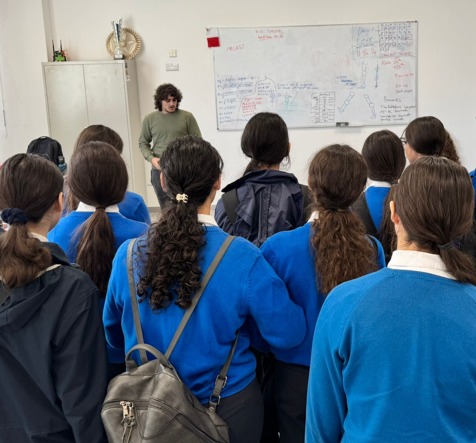
The Malta Digital Innovation Authority, and before its integration, the eSkills Malta Foundation, successfully delivered and keeps on delivering a considerable number of structured industry visits for Year 9 students across Malta and Gozo. Spanning many government schools, this initiative provides students with a unique opportunity to explore the dynamic field of Information and Communication Technology (ICT) through direct exposure to real-world working environments.
MDIA collaborates with the Ministry of Education, the Church and Independent Schools to schedule and successfully deliver this initiative without hindering the rest of the studies. Collaboration in this respect is key. The diversity of participating institutions spanning both Malta and Gozo reflects a strong national commitment to equipping young learners with relevant digital knowledge and career awareness.
At the core of this initiative is a simple but powerful objective: to bridge the gap between classroom learning and the practical realities of the ICT sector. Each visit is carefully structured to provide students with both contextual understanding and hands-on exposure. The experience typically begins with an introductory session delivered by the MDIA, outlining the importance of digital innovation in today’s world and highlighting the wide spectrum of career opportunities within ICT. These sessions are aimed not only to inform but also to inspire students to consider future pathways in the digital domain.
Students are introduced to the host organisations, where industry professionals provide valuable insights into their operations, core services, and the roles they play within Malta’s evolving digital economy. Participating organisations span both leading local enterprises and international firms such as ST Electronics, PwC, and EY, alongside key government and public sector entities.
Together, they offer a broad representation of the ICT ecosystem, showcasing diverse career pathways and areas of expertise, including software development, telecommunications, networking, server technologies, virtual reality, IT consulting, and digital innovation, while reflecting the collaborative nature of the sector across public and private domains.
A key feature of the visits was the guided tour of the company’s working environments, allowing students to observe live working environments and understand how technology is created, implemented and applied in practice. These tours were often complemented by interactive demonstrations and activities, providing students with a tangible sense of how ICT solutions are developed and implemented. Importantly, students also had the opportunity to engage directly with professionals, ask questions, and receive guidance on educational pathways and skill requirements.
This experiential learning approach proves highly effective in making ICT more accessible and relatable. By seeing how classroom concepts translate into real-world applications, students develop a deeper appreciation for the subject and its relevance. Moreover, the direct interaction with industry professionals fosters meaningful connections, giving students early exposure to mentorship and career guidance.
The impact of these visits extends well beyond immediate learning outcomes. They serve as a catalyst for both personal and professional development, helping students to better understand their interests, strengths, and potential career trajectories. In a rapidly evolving digital landscape, such early exposure is critical in shaping informed and confident future choices. Furthermore, these initiatives contribute to addressing the growing demand for digital practitioners by nurturing interest in ICT careers from a young age.
From a Good Practice perspective, this initiative stands out for its structured collaboration between education and industry, its scalability, and its clear alignment with national and European digital skills priorities. It demonstrates how relatively short, well-designed interventions can deliver significant impact by combining awareness-raising, experiential learning, and stakeholder engagement.
The benefits of industry school visits are multifaceted. For students, they enhance motivation, contextualise learning, and broaden career horizons. For educators, they provide a practical complement to curriculum delivery, enriching teaching with real-world relevance. For the industry, they offer an opportunity to engage with future talent, contribute to skills development, and strengthen corporate social responsibility efforts. At a systemic level, such initiatives help build a more digitally aware and career-ready generation, better equipped to contribute to the knowledge economy.
Importantly, this model is highly replicable across other European countries. Its success relies on three key elements: strong coordination between National Coalitions, education authorities and industry stakeholders, a clear structure for visits (including preparation, engagement, and follow-up), and a shared commitment to promoting digital careers. By leveraging existing networks, such as national digital skills coalitions, innovation agencies, and industry associations, other countries can adapt this approach to their local contexts. With relatively modest resources, similar programmes can be implemented to support the European agenda on digital skills, inclusion, and future workforce readiness.
In conclusion, the ICT industry visits initiative in Malta exemplifies how targeted, collaborative efforts can create meaningful learning experiences that extend beyond the classroom. By connecting education with industry, it not only inspires students but also lays the foundation for a more skilled, informed, and future-ready digital generation across Europe.