-
URL
-
Link Type
Organization url
-
Image
-
Publish in core platform
Yes
-
Target audience
Digital skills in education.Digital technology / specialisation
Artificial Intelligence Digital skillsDigital skill level
Basic IntermediateGeographic Scope - Country
MaltaIndustry - Field of Education and Training
Education science Information and Communication Technologies (ICTs) not further definedType of initiative
National initiative
Type of Funding
Public
Organization
Malta College of Arts, Science and Technology (MCAST)Skip to content

Malta Digital Skills and Jobs Platform (LISP)

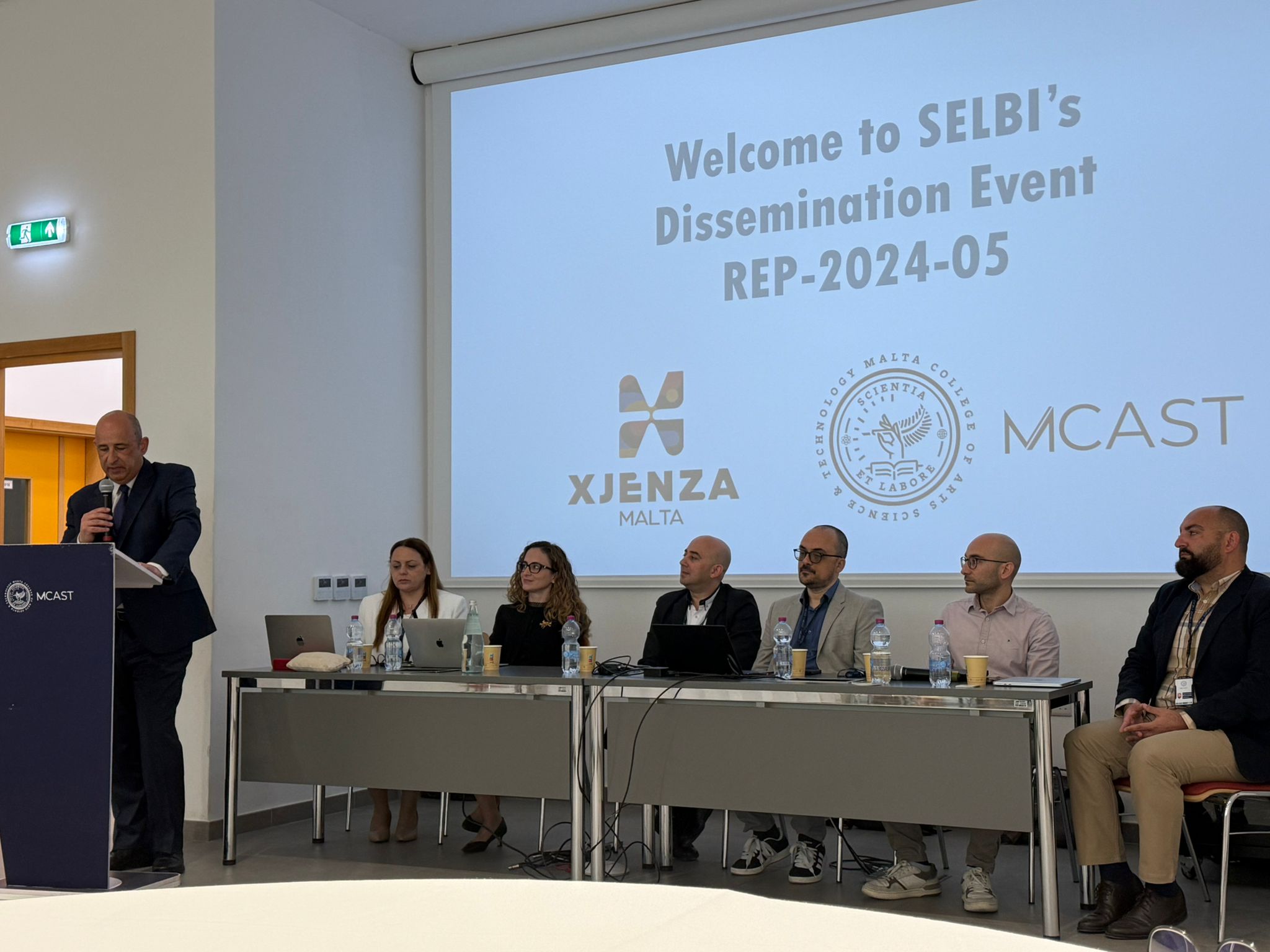
SELBI (Supporting Early chiLdhood education in Blue skills with generative artificial Intelligence) is a national research project funded by Xjenza Malta under the Research Excellence Programme (grant REP-2024-005) and hosted at the Malta College of Arts, Science and Technology (MCAST). Coordinated by Dr Shirley Ann Gauci, the project equips kindergarten and early primary educators with a locally hosted retrieval-augmented generative AI platform for curriculum planning on marine zoology and oceanography. The project ran from November 2024 to May 2026, with the mission of bringing blue skills into Maltese early years classrooms by lifting educators’ capacity to teach beyond their direct expertise.
Background and context
Maritime industries account for approximately 15% of Malta’s gross domestic product, yet the sector continues to report skills shortages and limited public awareness of marine sustainability. The European Commission’s EU Blue Economy Report 2025 and the European Mission to Restore our Ocean and Waters by 2030 both identify early and sustained ocean literacy as a precondition for a sustainable blue economy. The Council Recommendation of 22 May 2019 on High Quality Early Childhood Education and Care Systems similarly frames early years settings as the foundation on which lifelong learning is built.
A nationwide diagnostic survey of Maltese early childhood education and care (ECEC) educators, conducted by the SELBI team in May and June 2025 across kindergarten, Year 1, and Year 2 (population 967, achieved sample n = 137, margin of error ±7.60%), confirmed the gap empirically. Mean self-reported familiarity with the term “blue skills” was 1.80 on a 1–5 scale, with 61.3% of respondents at the floor of the scale; 75.9% reported lacking teaching guides, materials, or digital tools, and 81.8% wanted access to training. Critically, no significant differences in familiarity were detected by age, education level, years of experience, or school sector (Kruskal–Wallis, all p > .20), supporting a universal-provision response rather than a targeted rollout.
About this initiative
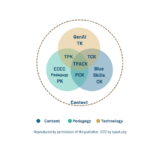
SELBI responds to this gap by combining a curated, expert-verified knowledge base on blue skills with a locally hosted generative AI platform designed for in-service educators. The project is grounded in the Technological Pedagogical Content Knowledge (TPACK) framework, which holds content, pedagogy, and technology as interdependent. Drawing on sociocultural theory, the platform is positioned as a more knowledgeable other that scaffolds educators’ capacity to teach outside their direct subject expertise, rather than a substitute for professional judgement.
The transdisciplinary team brings together six MCAST academics: Dr Shirley Ann Gauci (Principal Investigator) and Dr Francis Delicata, together with Dr Heathcliff Schembri (early childhood education and care), Ms Kimberly Terribile (marine biology and aquaculture), and Mr Alan Gatt and Mr Frankie Inguanez (artificial intelligence and applied data science). The work was organised across five phases: a nationwide diagnostic survey; knowledge-base curation; platform design and development; structured educator professional development; and validation and evaluation.
The platform itself is a retrieval-augmented generation (RAG) system running entirely on local infrastructure, with no cloud dependency and no transmission of educator or classroom data to external services. The hardware footprint is approximately €5,000: an AMD Ryzen 9 9900X workstation with an NVIDIA RTX 4090 (24 GB VRAM) and 64 GB DDR5 memory. The software stack uses Ollama to serve a 20-billion parameter open-weight generative model (gpt-oss:20b) alongside an embedding model, with a ChromaDB vector store, a Python and Flask backend orchestrated through LangChain and LangGraph, and a Vue.js conversational interface. The curated repository, expanded across the project’s lifetime to 75 expert-verified items spanning marine biology, ocean literacy, and Maltese curriculum and policy frameworks, is chunked, embedded, and retrieved at inference time to ground every educator query in source material.
Why is this a good practice?
SELBI is, to the project team’s knowledge, the first operational generative AI platform in Malta designed specifically to support ECEC educators in teaching marine science, and the first to combine TPACK-grounded pedagogical design with locally hosted inference. The platform was evaluated through two iterative cycles of expert review using an 11-criterion analytic rubric covering pedagogical appropriateness, content accuracy and relevance, and safety and inclusivity. Across Phase 1, the grand mean score was 4.80 out of 5 (n = 11 evaluable outputs); across the more demanding Phase 2, the grand mean was 4.50 (n = 15), with Pedagogical Appropriateness at 4.34, Content Accuracy at 4.67, and a perfect 5.00 score for absence of hallucinations. The hallucination-free finding is consistent with the expected grounding effect of retrieval-augmented generation and was independently corroborated by the participating educators during the professional development phase. Because the two domain experts were also project co-investigators, the evaluation should be read as a strong internal indication rather than an independent external validation; this is acknowledged transparently in the project’s published outputs.
The structured educator professional development programme, conducted across four sessions between November 2025 and March 2026 with four serving educators (Kindergarten 1 to Year 2) at a single Maltese state school, generated qualitative evidence of practical relevance. Educators tested the platform against authentic classroom scenarios, including structuring sea-based learning experiences, adapting activities for a child with sensory needs during a beach-themed session, and responding to children’s unanticipated questions. They reported that generated content was adaptable across subjects, year levels, and ability levels, and one participant reflected that the platform revealed possibilities for integrating blue skills that had not previously been apparent in their planning practice. Professional scepticism within the group functioned as a useful critical filter and improved the alignment between platform outputs and classroom realities.
Impact. The direct beneficiaries of the prototype phase are the four educators in the professional development cohort and, through them, the children across their four year groups. The diagnostic survey reached 137 educators nationally and produced the first dataset on Maltese ECEC educators’ blue skills familiarity, currently under review for publication in the European Early Childhood Education Research Journal. Findings have been disseminated through INTED2026 in March 2026 in Valencia, the DHBW AI TransferCongress 2026 in April 2026 in Heilbronn, and will be presented in EDULEARN26 Conference in June 2026 in Palma de Mallorca and the EECERA 2026 Conference in August 2026 in Madeira. A book chapter has been submitted for a publication on Transdisciplinary Approaches to Blue Humanities and another one is being developed for an upcoming Springer Palgrave Macmillan edited volume on AI in early childhood education and care. Local press coverage in the Sunday Times of Malta, Plumtri, and Sagħtar has extended public reach to the wider parent and educator community in both English and Maltese.
Alignment with EU and national policies. SELBI advances the Europe’s Digital Decade 2030 target of at least 80% of adults with basic digital skills by 2030 by lifting AI literacy among in-service ECEC educators, who arrive at a basic baseline and are scaffolded toward intermediate competence. It operationalises the Digital Education Action Plan 2021–2027, specifically Priority 2 on enhancing digital skills and competences for the digital transformation, and the Council Recommendation of 23 November 2023 on improving the provision of digital skills and competences in education and training. The platform’s design choices, namely local inference, admin-controlled knowledge-base ingestion, and transparency of source documents, support the obligations of the EU AI Act as they apply to educator-facing systems. At national level, SELBI contributes to Malta’s Strategy and Vision for Artificial Intelligence in Malta 2030 and to the National Education Strategy 2024–2030, and aligns with Malta’s commitments under the European Blue Economy Strategy.
Replication potential. SELBI is designed to be reproduced in other EU Member States. The platform code, system prompts, evaluation rubric, and curriculum mapping are language-aware but not language-bound; the approach can be retrained on any national ECEC framework and any regional marine-biology corpus. A partner institution would need a host college or university with an in-service educator network, a domain expert team covering ECEC pedagogy and marine science, a technical lead familiar with retrieval-augmented generation, and a single workstation of the specification described above. Funding could be secured through Erasmus+ Key Action 2, the Digital Europe Programme, Horizon Europe Cluster 2, or a national research-excellence equivalent. The originating team is available to support replication through technical documentation, training-of-trainers sessions, and joint funding applications.
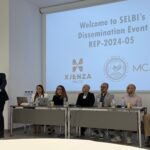
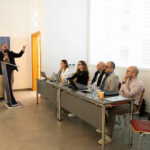
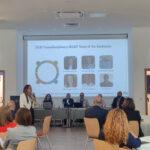
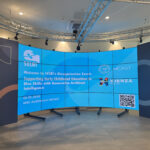
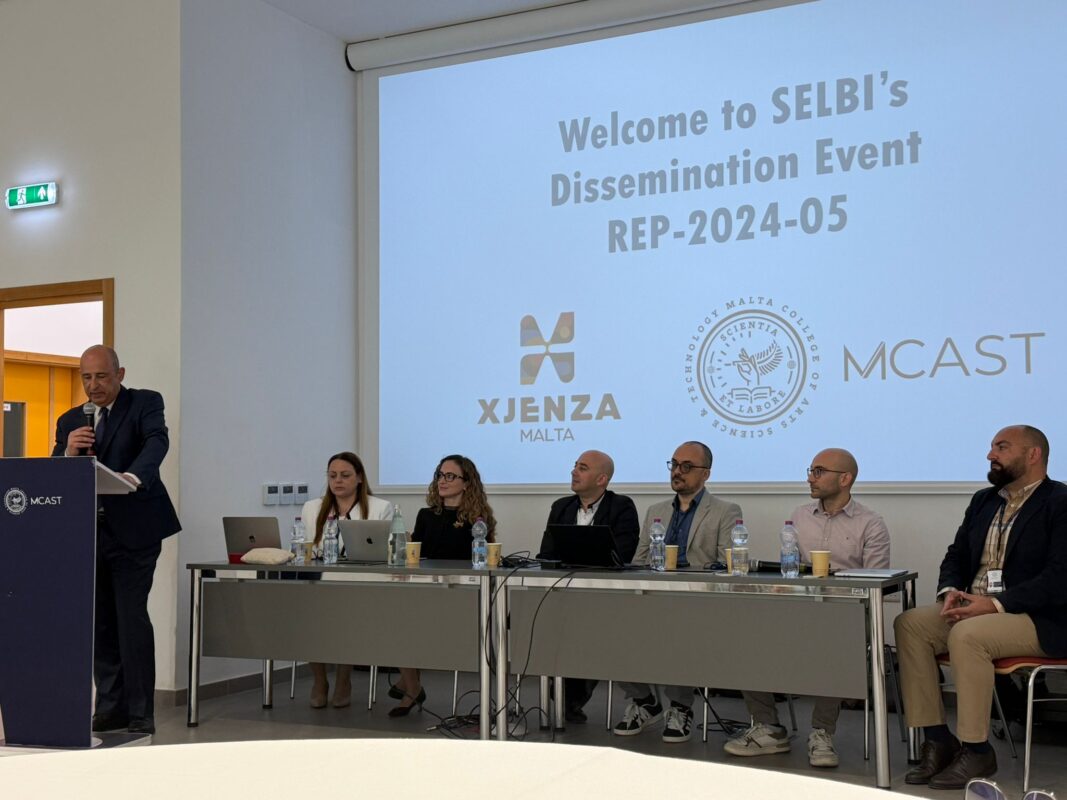
The project closed with a public dissemination event at MCAST on 5th May 2026, presenting the platform, the diagnostic findings, and the professional development outcomes to invited stakeholders from the education and research sectors. A second iteration, working title SELBI 2.0, is being scoped to extend the knowledge base into additional marine biology domains, strengthen Maltese-language support, and pilot the platform across a wider sample of schools.