-
URL
-
Link Type
Organization url
-
Image
-
Publish in core platform
Yes
-
Target audience
Digital skills for allDigital technology / specialisation
Digital skillsDigital skill level
Basic Intermediate AdvancedGeographic Scope - Country
MaltaIndustry - Field of Education and Training
Generic programmes and qualifications not further defined Basic programmes and qualificationsType of initiative
Local initiative
Type of Funding
Public
Organization
Malta Digital Innovation AuthoritySkip to content

Malta Digital Skills and Jobs Platform (LISP)

Gender mainstreaming in the digital arena has become a critical priority in shaping inclusive and future-ready economies. As digital technologies permeate every sector, from business and education to public services and innovation ecosystems, ensuring that women are equally represented is not just a matter of fairness but a strategic necessity. Diverse teams are proven to be more innovative, better at problem-solving, and more reflective of societal needs. Yet, despite growing awareness, women continue to be underrepresented in ICT professions and digital leadership roles. Bridging this gap requires sustained effort through policy, education, and targeted initiatives that empower women to participate fully in the digital transformation. Strengthening gender balance in this sector ultimately contributes to economic growth, social cohesion, and a more human-centric approach to technological advancement.
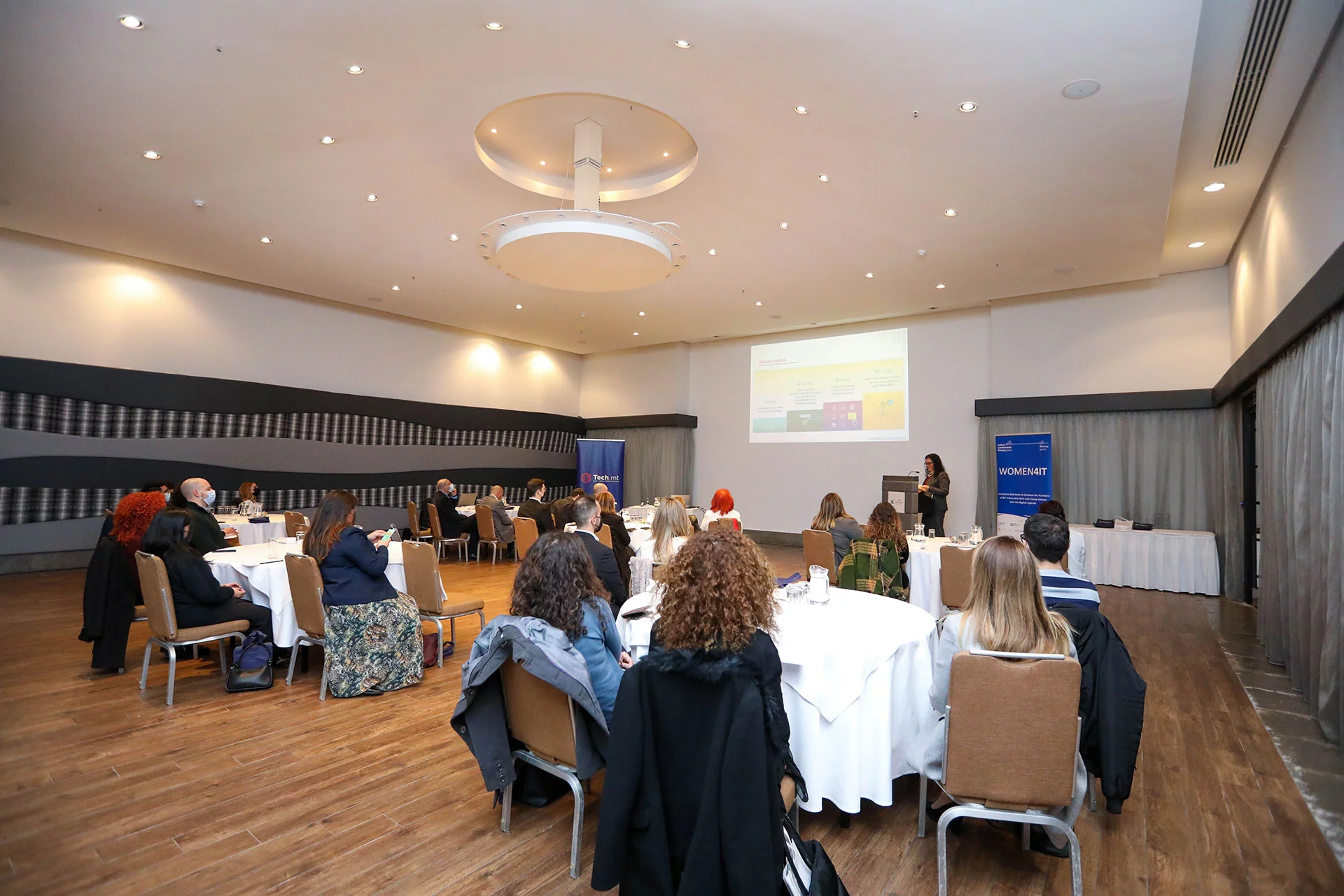
Against this backdrop, the Women4IT initiative stands out as a strong example of a coordinated and impactful response to the gender digital divide. Women4IT is a multi-stakeholder, pan-European partnership funded by the EEA Grants and the Norway Grants Fund for Youth Employment. Bringing together nine partners from across Europe, the initiative has been implemented in several countries, including Malta, Greece, Ireland, Latvia, Lithuania, Romania, and Spain. Its collaborative structure reflects the understanding that addressing complex societal challenges, such as gender imbalance in the digital sector, requires joint efforts across governments, industry, education providers, and civil society.
The initiative was developed in response to several pressing European challenges. These include youth unemployment, a persistent shortage of ICT specialists, and the continued low participation of women and girls in digital careers. Within the broader framework of Europe’s Digital Decade ambitions, these challenges represent both a risk and an opportunity. Without intervention, the digital gender gap could lead to a loss of valuable talent, reduced innovation capacity, and a widening socio-economic divide. Women4IT directly addresses this risk by promoting awareness, building skills, and facilitating access to employment opportunities for young women, particularly those who are not in employment, education, or training (NEETs).
A key strength of Women4IT lies in its holistic and user-centred approach. Rather than focusing solely on training, the initiative adopts a comprehensive pathway that begins with awareness-raising and extends through to employment integration. Awareness campaigns form a foundational element of the project, highlighting both the importance of digital skills and the existing gender gap in the sector. These campaigns aim to challenge stereotypes, inspire young women, and position digital careers as accessible and attractive pathways.
Following this, participants engage in a structured skills assessment process. This allows for the identification of individual strengths, interests, and areas for development. The use of an innovative online employability profiling tool plays a central role here, enabling participants to better understand their competencies while also helping employers identify suitable candidates. This data-driven approach ensures that training and career guidance are tailored to the needs of each participant, increasing the likelihood of successful outcomes.
Training within Women4IT is delivered through a dedicated learning platform that supports non-formal education. The focus is not only on technical digital skills but also on transversal competencies such as problem-solving, communication, and adaptability. Importantly, the initiative promotes a “learning to learn” mindset, equipping participants with the ability to continuously update their skills in a rapidly evolving digital landscape. This is particularly valuable in a sector where technological change is constant and lifelong learning is essential.
One of the most innovative aspects of Women4IT is the co-design of customised learning plans in collaboration with employers. This ensures that the skills being developed are directly aligned with labour market needs. By involving employers in the training design process, the initiative bridges the gap between education and employment, making participants more ready for jobs. In addition, Women4IT provides comprehensive job application and onboarding support, guiding participants through the transition from training to employment. This end-to-end support system significantly enhances the chances of sustainable job placement.
The initiative also places strong emphasis on partnerships. By engaging employers, training providers, recruiters, NGOs, and community organisations, Women4IT creates an ecosystem that supports young women at multiple levels. These partnerships not only facilitate employment opportunities but also contribute to a broader cultural shift within the digital sector, encouraging more inclusive practices and greater gender diversity.
Support from expert organisations such as the European Centre for Women and Technology and DIGITALEUROPE further strengthens the initiative. Their involvement brings valuable expertise, credibility, and strategic alignment with broader European digital and gender equality objectives. This ensures that Women4IT is not operating in isolation but is integrated within the wider European policy landscape.
The impact of Women4IT has been both significant and measurable. The initiative has reached approximately 10,000 young people through digital career awareness activities, helping to raise visibility and interest in digital professions. Around 1,000 young girls and women have been assessed using the employability profiling tool, providing valuable insights into their skills and career potential. Furthermore, approximately 900 participants have enrolled in education and training programmes, gaining the competencies needed to pursue digital careers.
Beyond these direct beneficiaries, the initiative has also engaged around 350 employers, introducing them to innovative solutions for recruitment and workforce development. This engagement is crucial in ensuring that the demand side of the labour market is aligned with the supply of skilled candidates. By fostering connections between trained participants and employers, Women4IT contributes to a more efficient and inclusive labour market.
At a national level, initiatives like Women4IT play an important role in supporting countries such as Malta in addressing skills shortages and promoting gender equality in the digital sector. By equipping young women with relevant skills and facilitating their entry into the workforce, the initiative contributes to national economic growth and resilience. It also complements broader national strategies aimed at digital transformation and workforce development.
From a European perspective, Women4IT aligns closely with the objectives of the Digital Decade, particularly in relation to increasing the number of ICT specialists and improving gender balance in the sector. The initiative demonstrates how targeted, collaborative actions can deliver tangible results and serve as a model for replication across other regions. Its emphasis on innovation, partnership, and inclusivity reflects the core values underpinning Europe’s digital and social agenda.
In conclusion, Women4IT represents a forward-looking and impactful approach to addressing the gender digital divide. By combining awareness, skills development, and employment support within a cohesive framework, the initiative not only empowers individual participants but also contributes to systemic change. As Europe continues its digital transformation journey, initiatives like Women4IT will be essential in ensuring that no one is left behind and that the digital future is truly inclusive.