-
Link Type
Organization url
-
Image
-
Publish in core platform
Yes
-
Target audience
Digital skills for allDigital technology / specialisation
Robotics Software Digital skillsDigital skill level
Basic Intermediate AdvancedGeographic Scope - Country
MaltaIndustry - Field of Education and Training
Generic programmes and qualifications not further defined Basic programmes and qualificationsType of initiative
Local initiative
Type of Funding
Public
Organization
Malta Digital Innovation AuthoritySkip to content

Malta Digital Skills and Jobs Platform (LISP)

Coding hackathons have become powerful instruments for nurturing digital talent, fostering innovation, and inspiring the next generation of problem-solvers. Beyond technical ability, they cultivate resilience, teamwork, and creative thinking skills that are increasingly essential in a world shaped by rapid technological change. By putting participants in high-pressure, real-world scenarios, such initiatives simulate the demands of the digital economy while making learning engaging and purposeful. In this context, Malta’s CodeSprint stands out as a flagship national initiative that successfully blends education, competition, and industry collaboration.
CodeSprint is an annual competitive coding competition organised by the Ministry for Education through its Directorate for STEM and VET Programmes, in collaboration with the Institute for Computer Education. The initiative benefits from the active support of key stakeholders such as the Malta Digital Innovation Authority and a range of private sector partners. Now in its 8th edition, CodeSprint has grown into one of Malta’s most anticipated and respected coding events, attracting participants from across the educational spectrum, industry, and beyond.
CodeSprint’s core design aims to challenge and inspire coding enthusiasts by testing their programming skills through a structured yet dynamic competition format that simulates the industry environment. What makes the initiative particularly impactful is its inclusivity across multiple levels. The competition is open to participants from secondary schools, post-secondary institutions, and an open category. This multi-tiered approach ensures that learners at different stages of their educational and professional journeys can engage meaningfully, compete at an appropriate level, and progressively develop their skills over time.
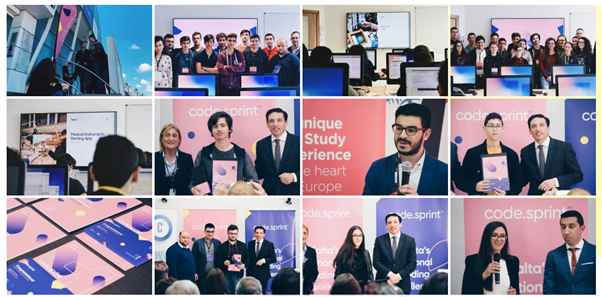
The competition format is carefully designed to balance accessibility with excellence. For participants in the secondary and post-secondary categories, the journey begins with an initial qualification round. Here, contestants tackle a series of coding challenges that assess their logical thinking, problem-solving abilities, and understanding of programming concepts. Only the top performers progress to the final stages, creating a sense of achievement and motivation while maintaining a high standard of competition.
A distinctive feature of CodeSprint is the inclusion of a dedicated bootcamp for finalists in these categories. This preparatory phase provides participants with targeted support, helping them refine their skills, deepen their understanding, and build confidence ahead of the final round. It reflects a strong educational ethos, one that prioritises growth and development alongside competition.
The final round for secondary and post-secondary participants is a high-stakes event where the best young coders in Malta compete for top honours. The top three performers in each category earn a place in the prestigious CodeSprint Hall of Fame and receive awards that recognise their achievements. This recognition plays a crucial role in motivating students, raising the profile of coding within schools, and showcasing excellence in digital skills at a national level.
For more advanced participants, the open category offers a different kind of challenge. Here, contestants take part in an intensive 8-hour coding marathon that pushes their technical and mental endurance to the limit. This format closely mirrors industry scenarios, where professionals must develop solutions under tight deadlines. The competitive nature of this category, combined with its demanding structure, makes it particularly attractive to experienced coders, university students, educators, and industry practitioners. As with the other categories, the top three performers earn a place in the CodeSprint Hall of Fame., reinforcing the initiative’s commitment to recognising excellence across all levels.
One of the key strengths of CodeSprint lies in its collaborative ecosystem. The partnership between government entities, educational institutions, and private companies strengthens the relevance of the competition in alignment with industry needs. Stakeholders such as MDIA contribute strategic support, while private sector partners often provide mentorship and career opportunities, resources, and prizes. This collaboration not only enhances the competition itself but also boosts the broader digital skills landscape in Malta by creating links between education and industry.
The impact of CodeSprint extends well beyond the competition. For students, it provides an opportunity to apply classroom knowledge in a practical, engaging context, helping to bridge the gap between theory and practice. For educators, it serves as a platform to promote STEM subjects and identify talented individuals who may benefit from further development. For the industry, it offers a glimpse into the next generation of digital talent, fostering connections that can lead to internships, employment, and collaboration.
At a national level, CodeSprint contributes to Malta’s strategic efforts to build a digitally skilled workforce. By encouraging participation in coding from a young age and sustaining engagement through higher levels of education and into professional contexts, the initiative supports a continuous pipeline of talent. It promotes a culture in which digital skills are valued, celebrated, and actively pursued.
From a European perspective, CodeSprint represents a highly effective and scalable good practice. As countries across Europe work to strengthen their digital capabilities and address persistent skills gaps, initiatives like this align closely with the ambitions of the European Digital Decade. The Digital Decade sets clear targets for 2030, including increasing the number of ICT specialists, improving basic and advanced digital skills across the population, and fostering a digitally competent workforce capable of supporting innovation and economic growth.
In this context, CodeSprint contributes directly to these objectives by nurturing interest in coding from an early stage and sustaining it through progressively more advanced levels. By engaging students, young people, and professionals alike, the initiative supports both the development of future ICT specialists and the broader goal of raising digital competence among citizens. Its competitive and hands-on approach also complements formal education systems, as it offers a practical way to develop skills that are often difficult to cultivate in traditional classroom settings alone.
Moreover, the initiative supports the Digital Decade’s emphasis on inclusivity and participation. By providing opportunities across multiple educational levels and creating an accessible entry point into coding, CodeSprint helps ensure that digital skills development is not limited to a narrow segment of the population. This is particularly important as Europe seeks to reduce disparities in digital access and capability across regions and demographics.
The collaborative model underpinning CodeSprint also reflects the multi-stakeholder approach encouraged at the European level. By bringing together public authorities, education providers, and industry partners, the initiative creates a dynamic ecosystem that supports innovation, relevance, and sustainability. This model can be readily adapted and replicated in other countries, making it a valuable reference point for policymakers and practitioners seeking to design impactful digital skills initiatives.
In conclusion, CodeSprint is more than just a competition; it is a catalyst for digital skills development, innovation, and talent discovery in Malta. By embedding coding within a broader culture of challenge, achievement, and collaboration, it creates lasting value for individuals and society. As Europe progresses towards its Digital Decade targets, initiatives like CodeSprint demonstrate how national efforts can significantly contribute to common European goals. It guarantees that citizens are not only prepared for the digital future but also empowered to actively shape it.