-
Link Type
Organization url
-
Image
-
Publish in core platform
Yes
-
Target audience
Digital skills for allDigital technology / specialisation
Cybersecurity Digital skillsDigital skill level
Basic Intermediate AdvancedGeographic Scope - Country
MaltaIndustry - Field of Education and Training
Generic programmes and qualifications not further defined Basic programmes and qualificationsType of initiative
Local initiative
Type of Funding
Public
Organization
Malta Digital Innovation AuthoritySkip to content

Malta Digital Skills and Jobs Platform (LISP)

As e-commerce continues to grow, cybersecurity has become a key differentiator for businesses operating online. Companies that prioritise the protection of customer data and secure digital transactions not only reduce risk but also enhance their reputation and competitiveness. At the same time, consumers are becoming increasingly aware of cybersecurity issues, raising their expectations for safe and trustworthy online platforms.
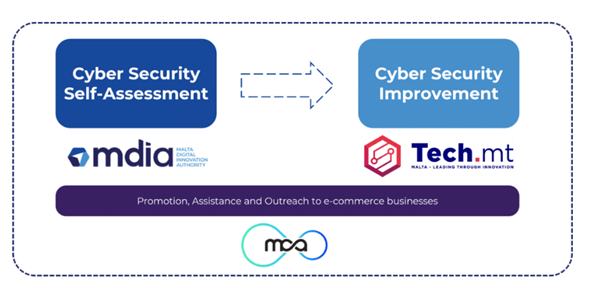
In response to these evolving demands, Mind the Gap was launched as a national initiative aimed at supporting e-commerce businesses in Malta. The initiative is driven by the Malta Digital Innovation Authority (MDIA), in collaboration with Tech.mt and the Malta Communications Authority (MCA). Its primary objective is to help small and medium-sized enterprises (SMEs) better understand their cybersecurity posture and take practical steps to strengthen it.
The initiative is structured around two complementary schemes: the Cybersecurity Self-Assessment and the Cybersecurity Improvement Scheme. Together, these provide a clear and guided pathway for businesses to evaluate their current cybersecurity maturity and implement targeted improvements. This approach ensures that organisations are not only aware of potential vulnerabilities but are also supported in addressing them effectively.
The Cybersecurity Self-Assessment serves as the starting point of this journey. Through a structured evaluation tool, SMEs can identify strengths and weaknesses in their existing systems and practices. Upon completion, participants receive a cybersecurity score along with expert feedback from MDIA, outlining both positive aspects and areas requiring attention. Businesses also have the option to obtain formal recognition, demonstrating their commitment to cybersecurity to clients and stakeholders.
Building on this, the Cybersecurity Improvement Scheme provides financial support to businesses that have completed the assessment phase. This enables them to invest in targeted enhancements, including engaging cybersecurity professionals, acquiring relevant technologies, and upskilling employees. By linking funding directly to identified gaps, the initiative ensures that improvements are meaningful, strategic, and aligned with actual business needs.
A defining feature of Mind the Gap is its practical and accessible design. Rather than overwhelming businesses with complex frameworks, it offers a step-by-step process that is particularly suited to SMEs, which may have limited resources or in-house expertise. The involvement of the MCA further strengthens outreach efforts, ensuring that the initiative effectively reaches the e-commerce community.
Impact of the Initiative
The impact of Mind the Gap is expected to be both immediate and long-term. At a business level, it enables SMEs to strengthen their cybersecurity resilience, reduce exposure to threats, and build greater trust with customers. This increased confidence can translate into higher customer retention and growth in online transactions. At a national level, the initiative contributes to a more secure digital marketplace, reinforcing Malta’s position as a reliable hub for digital services and e-commerce.
From a broader perspective, Mind the Gap aligns with European priorities around digital trust, cybersecurity, and SME support. Equipping businesses with the tools and resources needed to operate securely supports wider efforts to build a robust and resilient digital economy. Its structured approach also provides a model that could be replicated in other contexts, amplifying its potential impact beyond Malta.
In conclusion, Mind the Gap represents a proactive and well-coordinated response to the growing importance of cybersecurity in the digital economy. By combining assessment, guidance, and financial support, it empowers businesses to take control of their cybersecurity journey. As digital transformation continues to accelerate, such initiatives play a crucial role in ensuring that growth is underpinned by security, trust, and resilience.