-
URL
https://maltalibraries.gov.mt/iguana/www.main.cls?surl=MaltaLibraries
-
Link Type
Organization url
-
Image
-
Publish in core platform
Yes
-
Target audience
Digital skills for allDigital technology / specialisation
RoboticsDigital skill level
Basic Intermediate AdvancedGeographic Scope - Country
MaltaIndustry - Field of Education and Training
Education not further definedSkip to content

Malta Digital Skills and Jobs Platform (LISP)

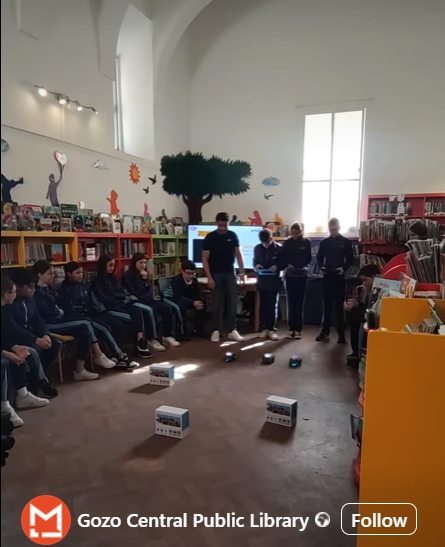
Hosting coding and robotics sessions in public libraries offers a unique and impactful way to engage young learners, particularly those aged 9 to 11. These sessions not only introduce essential digital skills but also foster a love for learning in an environment that is both inclusive and rooted in the heart of the community. The Malta Digital Innovation Authority hosted the Coding and Robotic Sessions to Malta and Gozo’s Main Public Libraries.
Why is this a good practice?
By choosing public libraries as our venue, we intentionally moved away from the traditional school setting. Libraries are neutral, welcoming spaces that encourage exploration and creativity without the pressure often associated with formal classrooms. This shift in environment plays a significant role in how children engage with the content — they feel more relaxed, curious, and open to experimentation. Being surrounded by books, resources, and fellow community members also reinforces the idea that learning can happen anywhere, not just within school walls.
Coding and robotics provide a hands-on, interactive approach to problem-solving, logical thinking, and creativity. During our sessions, students worked with block-based coding platforms and entry-level robotics kits. They learned how to break down complex tasks into manageable steps, debug their own code, and work collaboratively to solve challenges. These are key skills not just in computing, but in all areas of life and future employment.
Moreover, the collaborative nature of the activities helped develop teamwork, communication, and resilience. Children often worked in pairs or small groups, learning to share ideas, listen to each other, and try again when things didn’t work the first time. It was especially rewarding to see children take pride in their progress and gain confidence in their abilities, even those who had never coded before.
The library setting also helped us reach a broader and more diverse group of learners, including those who might not typically take part in after-school STEM clubs. Parents and carers were also more likely to engage, given the central, familiar location and the welcoming atmosphere of the library.
In summary, delivering coding and robotics sessions in public libraries proved to be a powerful way to support young people’s digital skills, creativity, and confidence. It highlighted the library’s role not just as a place for reading, but as a dynamic community hub for learning and innovation.
Disclaimer: This article is based on information gathered from various online sources and intended only for informational purposes. It does not constitute professional advice or recommendations. While the information provided is accurate and true to the best of our knowledge, we make no representations or warranties of any kind, express or implied, regarding the completeness, accuracy, reliability, suitability, or availability of the topics covered. We strongly advise readers to conduct further research and consult appropriate professionals or experts before making any decisions based on the information presented in this article. We disclaim any liability for losses or damages incurred based on the information provided herein.