-
Image
-
Publish in core platform
No
-
URL
https://www.oecd.org/en/publications/oecd-skills-outlook-2025_26163cd3-en.html
-
Link text
OECD Skills Outlook 2025
-
Link Type
Skills Intelligence publication url
-
Target audience
Digital skills for allDigital technology / specialisation
Digital skillsDigital skill level
BasicGeographic Scope - Country
European UnionIndustry - Field of Education and Training
Literacy and numeracyTarget language
Type of initiative
International initiative
Event setting
Publication type
General guidelines Unpacking Place Transformation September 18, 2026
 ILO: Changing landscape of skills in the age of AI September 11, 2026
Study supporting the review of the Digital Decade policy programme September 11, 2026
Lifelong learning and skills for the future August 14, 2026Skip to content
ILO: Changing landscape of skills in the age of AI September 11, 2026
Study supporting the review of the Digital Decade policy programme September 11, 2026
Lifelong learning and skills for the future August 14, 2026Skip to content

Malta Digital Skills and Jobs Platform (LISP)

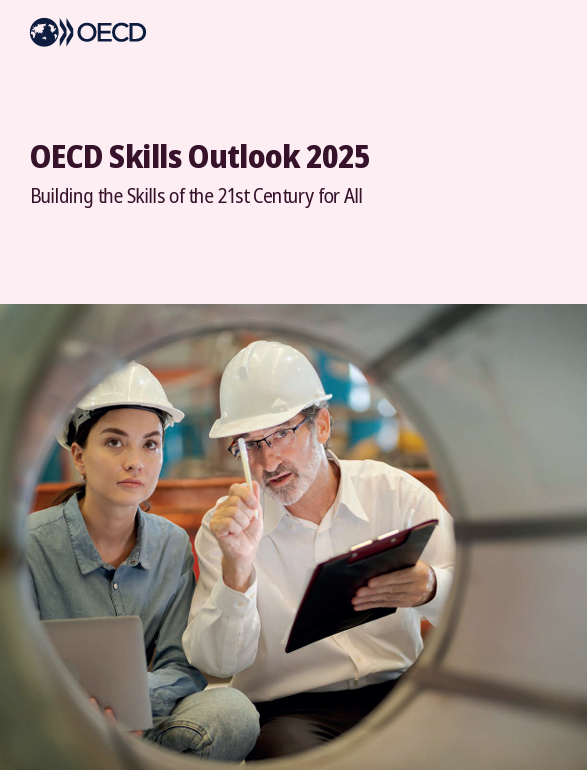
The OECD Skills Outlook 2025: Building the Skills of the 21st Century for All examines how access to essential skills is shaped by people’s backgrounds and why this matters for fairness, productivity and social cohesion.
The report finds that skills needed to succeed in the 21st century (including literacy, numeracy, adaptive problem-solving, and social and emotional skills) are unevenly distributed across populations. Factors beyond individual control, such as socio-economic background, gender, migrant status and where someone grows up, play a major role in determining who develops these skills and how they are rewarded in the labour market.
Skills disparities begin early in life and often widen over time. While education systems are formally merit-based, patterns of selection into fields of study, further education, training and occupations tend to reproduce existing advantage. Adult learning opportunities are also unevenly distributed, with people from disadvantaged backgrounds less likely to access training that leads to career progression.
The report shows that most socio-economic differences in employment and earnings are explained by differences in education, skills and learning opportunities, rather than by individual ability. This highlights the central role of public policy in shaping outcomes.
To reduce skills gaps and improve equity, the OECD calls for:
- early and sustained investment in learning across the life course
- inclusive education and training pathways
- improved access to adult learning
- effective career guidance
- skills-based hiring and recognition of skills gained outside formal education.
- Addressing skills disparities is critical to ensuring fairer opportunities, stronger economic growth and more cohesive societies.
