-
Image
-
Publish in core platform
No
-
Link Type
Organization url
-
Digital technology / specialisation
Artificial Intelligence Digital skills Internet of Things Machine LearningDigital skill level
Basic Intermediate AdvancedGeographic Scope - Country
Non-EU MaltaType of initiative
Local initiative

Malta Digital Skills and Jobs Platform (LISP)

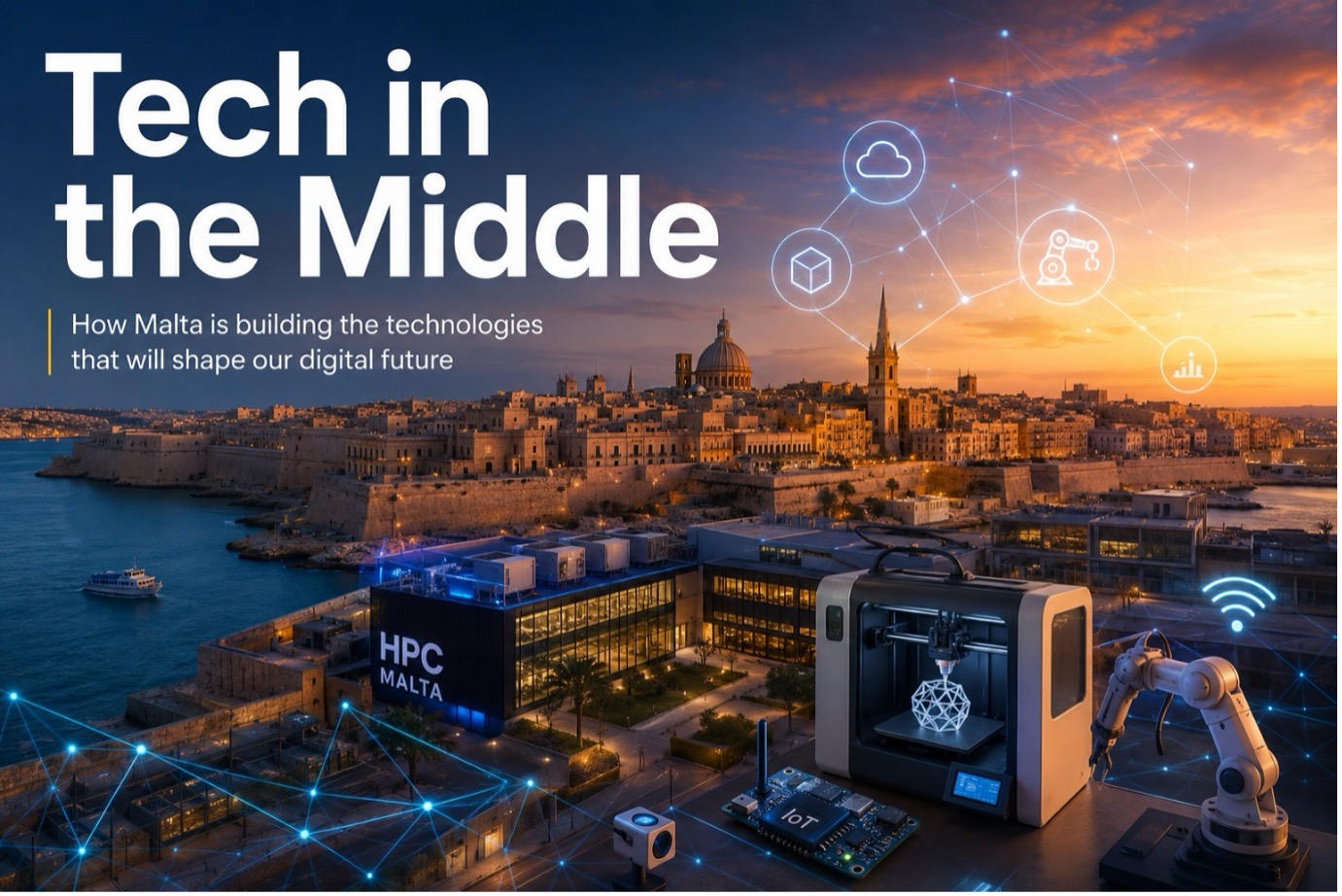
How Malta Is Building the Foundations of a Modern Innovation Economy
Author: Bernard Montebello & Coauthor: Thomas Abela
Abstract
Malta’s technology ecosystem is undergoing a significant transformation. Once known primarily for financial services, tourism, and online gaming, the country is increasingly positioning itself around digital infrastructure, startup innovation, artificial intelligence, high-performance computing, engineering technologies, and research-driven entrepreneurship.
As Europe accelerates investment in technological sovereignty, AI capability, and digital resilience, Malta is seeking to carve out a distinctive role within the continent’s innovation landscape. Central to this evolution are investments in advanced digital infrastructure, emerging technologies, startup support systems, and innovation-enabling institutions such as DiHubMT.
The question is no longer whether Malta can attract international business. The more important challenge is whether it can build a sustainable innovation economy capable of creating globally relevant technologies, scaling startups, and translating research into commercial value.
Introduction
By 2026, Malta’s startup ecosystem has reached an inflection point. For years, the Mediterranean island was primarily associated with financial services, tourism, online gaming and corporate structuring. Today, Malta is attempting something more ambitious, positioning itself as a serious European innovation jurisdiction capable of supporting technology startups, research commercialisation, AI development, Digital Infrastructure, Fintech Innovation and high-growth entrepreneurship.
The shift is becoming increasingly visible across the ecosystem. International startup conferences are choosing Malta as a destination. European innovation programmes are deepening their footprint locally. Venture networks are becoming more active. New incubators and digital infrastructure projects are emerging. Universities and research institutions are placing greater emphasis on commercialisation. At the centre of many of these developments sits DiHubMT, Malta’s European Digital Innovation Hub, which has rapidly become one of the country’s most visible technology ecosystem initiatives.
The challenge for Malta is no longer whether it can attract international business. The larger question is whether it can evolve into a sustainable innovation economy capable of supporting globally relevant technology development, advanced digital infrastructure and scalable innovation ecosystems.
A Small Market Seeking Scale
Malta’s limitations are well understood within European startup circles. The country’s domestic market is small, talent pools remain constrained, and access to venture capital continues to lag larger ecosystems such as Berlin, Paris, Amsterdam and Barcelona.
Yet, Malta possesses several structural advantages that increasingly matter in Europe’s fragmented innovation economy. English remains an official language, regulatory authorities are generally accessible, company formation is comparatively straightforward, and the country sits within the EU single market while maintaining close commercial ties to North Africa, the Middle East and Southern Europe.
These dynamics have helped Malta position itself as a launchpad for internationally oriented startups rather than purely domestic businesses.
According to StartupBlink’s 2025 Global Startup Ecosystem Index, Malta ranked 59th globally and 20th in Western Europe, while recorded an ecosystem growth of more than 11% in 2025. StartupBlink also identified fintech, life sciences and digital technologies as emerging strengths within the Maltese ecosystem.
The ecosystem’s economic footprint is also expanding. Malta Business Weekly, citing StartupBlink ecosystem data, reported that Malta generated approximately €3.9 billion in startup ecosystem value during 2025 , a metric combining startup valuations and exits.
The country’s technology profile has evolved significantly over the last decade.
What began with strengths in remote gaming and digital payments has broadened into fintech infrastructure, blockchain experimentation, SaaS companies, AI-enabled services, cybersecurity, digital health, esports, cloud services and research-led innovation.
A growing number of fintech, gaming technology, SaaS and AI-focused startups have contributed to Malta’s increasing visibility within European innovation rankings and investment discussions.
At the same time, Malta has increasingly positioned itself as a neutral testing ground for emerging technologies.
The country was among the earliest European jurisdictions to establish dedicated digital asset and blockchain frameworks in 2018. While the initial cryptocurrency wave produced mixed outcomes, the experience accelerated regulatory learning around digital innovation, compliance and emerging technology governance.
That regulatory familiarity is becoming increasingly relevant as Europe enters a new phase shaped by the EU AI Act, cybersecurity directives, digital identity regulation and data governance frameworks.
DiHubMT and the Infrastructure Question
One of the most significant developments within Malta’s innovation ecosystem has been the emergence of DiHubMT. Backed through the European Digital Innovation Hubs network and aligned with broader EU digital transformation priorities, DiHubMT was established to support startups, SMEs and public sector digital innovation.
Its role extends beyond co-working space or startup incubation.
DiHubMT is increasingly positioning itself as a connective layer between entrepreneurs, researchers, government agencies, EU funding mechanisms, academia and technology infrastructure.
Writing in The Malta Independent in 2025, DihubMT was described as an initiative that is central to Malta’s long-term digital transition strategy and aligned it with Malta Vision 2050.
By late 2025, DiHubMT’s facilities were supporting a growing portfolio of startups and innovation-driven SMEs across AI, cybersecurity, digital health and advanced digital technologies.
The hub’s role increasingly reflects a broader European policy shift toward coordinated innovation infrastructure designed to accelerate technology adoption, startup scaling and cross-border collaboration. The hub’s strategic importance lies in timing.
Across Europe, governments and innovation agencies are increasingly recognising that startup ecosystems require more than tax incentives or marketing campaigns. Successful ecosystems rely on coordinated infrastructure: access to research facilities, digital testing environments, mentoring, international networks, regulatory guidance and investment readiness support.
For smaller states such as Malta, building that connective infrastructure is particularly important.
Across Europe, smaller innovation ecosystems are increasingly competing through regulatory agility, sector specialisation and highly connected digital infrastructure rather than domestic market scale alone. DiHubMT’s model reflects this reality.
The initiative has increasingly focused on supporting startups operating in AI, advanced digital technologies, cybersecurity, smart manufacturing, digital health and research commercialisation. It also acts as an access point into wider European innovation ecosystems, particularly through EU funding and collaboration frameworks. This European integration may ultimately prove more important than local market size.
Engineering the Next Phase of Malta’s Innovation Economy
Beyond startups and digital services, Malta is increasingly investing in the technological infrastructure required to support advanced innovation ecosystems.
This transition is particularly visible in areas such as high-performance computing, artificial intelligence infrastructure, engineering technologies, IoT systems, robotics, additive manufacturing and advanced digital prototyping.
At the centre of this shift is Malta’s growing emphasis on computational infrastructure.
The country’s High Performance Computing platform, developed through national digital investment strategies, represents one of the most significant technology infrastructure projects undertaken locally in recent years. The system is designed to support data-intensive research, AI experimentation, simulation modelling, engineering applications and advanced analytics.
Within European innovation policy, computational infrastructure is increasingly viewed as strategic national capability rather than simply research support.
For Malta, HPC infrastructure creates the foundations for a more advanced technology economy capable of supporting industries far beyond traditional digital services.
This includes applications in:
- AI model development and testing
- digital twins and smart infrastructure
- climate and maritime simulations
- healthtech analytics
- engineering optimisation
- cybersecurity modelling
- fintech data processing
- advanced manufacturing systems
- autonomous and connected systems
The availability of local computational infrastructure also changes the operating environment for startups and researchers.
Historically, many small ecosystems lacked the infrastructure necessary to support computationally intensive innovation. Increasingly, Malta is attempting to close that gap by aligning itself with Europe’s broader push toward digital sovereignty and technological resilience.
DiHubMT is playing an increasingly important role within that transition.
Rather than operating solely as a startup support platform, the hub is increasingly becoming part of a wider innovation infrastructure layer connecting SMEs, researchers, engineers, digital specialists and emerging technology ventures.
This is particularly important in sectors where innovation depends on access to testing environments, advanced digital tools and interdisciplinary collaboration.
The Rise of Applied Engineering and Deep Technology
One of the more significant changes taking place within Malta’s technology landscape is the growing convergence between software innovation and applied engineering.
Historically, much of Malta’s digital economy focused on software services, gaming operations and financial technologies. The next phase of growth is increasingly expanding into engineering-led innovation sectors with stronger links to hardware, manufacturing and industrial technologies.
This includes growing activity surrounding:
- Internet of Things (IoT) systems
- smart infrastructure technologies
- embedded systems engineering
- sensor technologies
- robotics and automation
- maritime technologies
- industrial digitalisation
- aerospace-related engineering research
- additive manufacturing and 3D printing
3D printing and additive manufacturing are becoming increasingly relevant within Malta’s innovation discussions. Across Europe, additive manufacturing is reshaping how smaller economies approach industrial capability. Rather than competing through large-scale manufacturing capacity, smaller states are increasingly focusing on rapid prototyping, customised engineering production and specialised high-value design.
For Malta, this creates opportunities in sectors such as medical devices, maritime engineering components, aerospace prototyping, advanced materials and precision manufacturing. The technology also aligns naturally with Malta’s research ecosystem and engineering education capabilities.
Several ecosystem stakeholders increasingly view additive manufacturing as strategically important because it lowers barriers between research, design and commercial experimentation.
The same dynamic applies to IoT engineering.
As Europe accelerates investment into smart infrastructure, connected devices and industrial digitalisation, Malta is increasingly positioning itself as a testing ground for agile engineering deployment.
The country’s compact geography creates unique advantages for piloting connected infrastructure systems, including:
- smart mobility networks
- energy optimisation systems
- maritime monitoring technologies
- environmental sensing platforms
- digital health infrastructure
- smart tourism applications
- urban analytics systems
Smaller jurisdictions often possess the ability to implement cross-sector digital experimentation more rapidly than larger states with fragmented administrative systems.
This operational flexibility is becoming increasingly valuable as European economies adopt AI-enabled infrastructure and data-driven public systems.
AI Infrastructure and the Future Digital Economy
Artificial intelligence is increasingly influencing Malta’s long-term innovation strategy.
Rather than attempting to compete directly with Europe’s largest AI research centres, Malta is increasingly focusing on applied AI integration across public infrastructure, digital services, fintech systems, cybersecurity, maritime technologies and health innovation. This approach reflects a broader shift taking place across Europe.
Many secondary innovation ecosystems are prioritising practical AI deployment, computational infrastructure and cross-sector integration rather than frontier model development alone. Malta’s combination of regulatory accessibility, EU integration and digital infrastructure investment creates opportunities for applied AI experimentation in highly regulated sectors.
The development of AI-ready infrastructure is also beginning to influence startup formation.
A growing number of technology ventures are emerging around data analytics, intelligent automation, machine learning-enabled services, predictive systems and AI-enhanced enterprise software.
The intersection between AI and engineering technologies may ultimately become one of Malta’s most strategically important innovation areas.
AI-enabled manufacturing systems, predictive maritime analytics, smart logistics infrastructure and autonomous systems all require close collaboration between software engineering, data infrastructure and applied industrial technologies.
This convergence is reshaping how smaller European innovation ecosystems define competitiveness.
Increasingly, value creation is moving away from pure scale and toward highly specialised technological capability.
Building a Connected Innovation Island
Malta’s long-term opportunity may ultimately lie in its ability to operate as a highly connected innovation environment where digital infrastructure, engineering capability, entrepreneurship and policy coordination interact more efficiently than in larger ecosystems.
The country’s scale, once viewed primarily as a limitation, is increasingly being reframed as an operational advantage for technology deployment and ecosystem coordination.
This is particularly relevant in areas such as:
- smart infrastructure implementation
- AI-enabled public systems
- digital regulation testing
- engineering prototyping
- research-commercial integration
- advanced digital services
- sustainable technology deployment
- maritime and environmental innovation
DiHubMT’s growing role within the ecosystem reflects this broader direction.
The initiative increasingly represents not only startup support infrastructure, but also part of Malta’s wider attempt to create a coordinated national innovation environment capable of supporting experimentation, digital transformation and advanced technological development.
Within the wider European context, Malta is positioning itself less as a mass-market technology centre and more as a specialised innovation jurisdiction capable of rapidly integrating emerging technologies into real-world operational environments.
That positioning may prove increasingly relevant as Europe places greater emphasis on technological resilience, AI capability, digital sovereignty and advanced engineering innovation.
Malta’s Position in Europe’s Innovation Economy
Malta’s innovation strategy increasingly reflects a broader European trend: the rise of specialised secondary startup ecosystems. Rather than competing directly with London, Berlin or Paris, smaller ecosystems across Europe are attempting to differentiate through speed, regulation, sector expertise and international connectivity.
Malta’s emerging position appears increasingly tied to:
- fintech and digital finance
- gaming and esports technologies
- AI-enabled digital services
- digital infrastructure
- research commercialisation
- regulatory technology
- specialised innovation support
- EU innovation programme participation
The country’s ability to move quickly within European regulatory frameworks may prove to be one of its most important competitive advantages.
As the EU places greater emphasis on technological sovereignty, digital resilience and innovation capacity, smaller member states capable of rapidly implementing digital infrastructure and innovation frameworks could become increasingly relevant.
That does not guarantee success.
Malta still faces serious constraints around venture scale, talent density, research intensity and ecosystem depth. But the direction of travel is increasingly clear. The country is evolving from a service-based digital economy into a more structured innovation ecosystem centred on startups, technology infrastructure and research-driven entrepreneurship.
Initiatives such as DiHubMT illustrate how Malta is attempting to accelerate that transition, not by replicating Silicon Valley, but by building a smaller, highly connected European Innovation hub capable of operating across borders.
Malta can convert ecosystem momentum into globally recognised innovation capability, what is increasingly evident, is that the country no longer sees innovation as a peripheral economic activity.
It is becoming central to Malta’s long-term economic strategy.
References and Further Reading
The following sources informed the reporting, ecosystem analysis and technology context referenced throughout this article.
Sources
- EU-Startups – Malta startup and innovation ecosystem coverage
https://www.eu-startups.com/ - Start in Malta
https://startinmalta.com/ - The Malta Independent – DiHubMT and digital innovation reporting
https://www.independent.com.mt/ - StartupBlink Global Startup Ecosystem Index and ecosystem overview
https://www.startupblink.com/ - Startup Guide Malta
https://www.startupguide.com/ecosystems/malta - Lovin Malta – From Research to Revenue
https://lovinmalta.com/ - European Commission – European Digital Innovation Hubs and Digital Strategy
https://digital-strategy.ec.europa.eu/ - Malta Enterprise
https://maltaenterprise.com/ - University of Malta
https://www.um.edu.mt/ - Malta Business Weekly
https://maltabusinessweekly.com/ - OpenVC Malta ecosystem and investor data
https://www.openvc.app/country/Malta
Editorial Disclaimer
This document was prepared with the assistance of generative AI tools for editorial support (e.g., language refinement and drafting suggestions). Any AI-generated suggestions were reviewed, edited, and validated by the authors, who remain fully responsible for the final content. Where relevant, AI tools were also used to develop illustrative concepts and image-generation prompts; final selection and inclusion decisions were made by the authors and the publisher.
This article is based on information gathered from various online sources and intended only for informational purposes. It does not constitute professional advice or recommendations. While the information provided is accurate and true to the best of our knowledge, we make no representations or warranties of any kind, express or implied, regarding the completeness, accuracy, reliability, suitability, or availability of the topics covered. We strongly advise readers to conduct further research and consult appropriate professionals or experts before making any decisions based on the information presented in this article.
We disclaim any liability for losses or damages incurred based on the information provided herein