-
Image
-
Publish in core platform
No
-
URL
https://www.europeanschoolnetacademy.eu/courses/course-v1:BIK+OnlineSafety+2025/
-
Link text
BIK MOOC "Helping children build healthy online relationships"
-
Link Type
Training url
-
Target audience
Digital technology / specialisation
Digital skillsDigital skill level
BasicGeographic Scope - Country
European UnionIndustry - Field of Education and Training
Target language
Type of initiative
EU institutional initiative
Event setting
Skip to content

Malta Digital Skills and Jobs Platform (LISP)

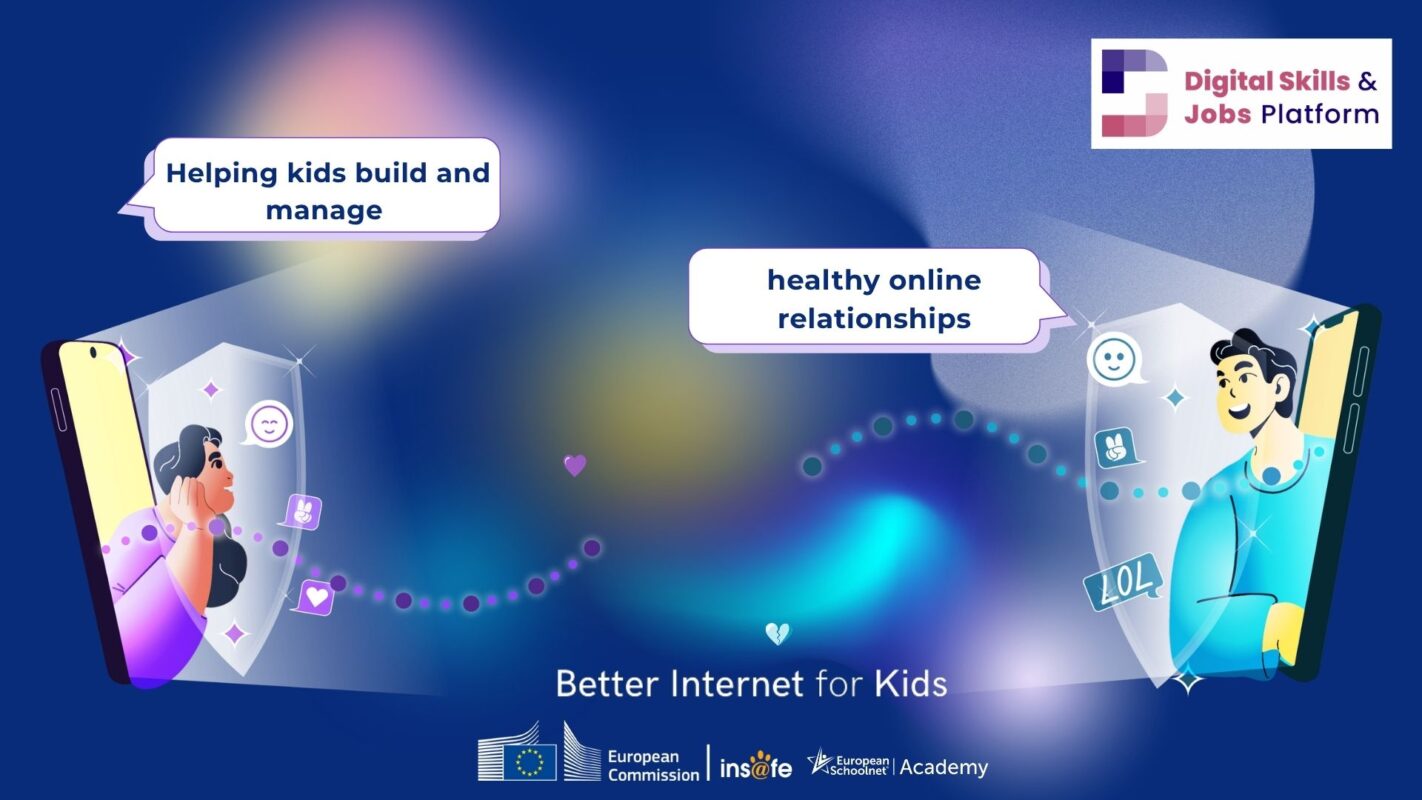
The “Helping kids build and manage healthy online relationships” MOOC, developed as part of the Better Internet for Kids (BIK initiative, kicked off on October 6. If you are a teacher working with children or young people, you can still join this free course to learn techniques to provide better support to your students, and see them thrive in the digital world.
Through the digital lens: young people and the Internet
There is no denying that young people spend a significant chunk of their time online. Whether this is chatting or connecting with one another, playing an online game together with friends, browsing through (or posting on) social media – an increasingly large part of the relationships young people establish happen online. This is not a uniquely youth-related challenge: the blurring of physical and digital environments is so fast-paced it can make anyone’s head spin. Yet, children and youngsters face their own set of issues when interacting with others online.
A new Massive Open Online Course (MOOC) under the Better Internet for Kids (BIK) project, which kicked off on 6 October 2025, explores the intricate dynamics of young people’s online lives, diving into some of the trickiest risks and challenges that emerge with digital interaction. How can teachers encourage kids and young people to actively seek out healthy, kind, and safe relationships with others online? How can we prepare young people for the challenges they are most likely to face when interacting with others in digital environments? The MOOC “Helping kids build and manage healthy online relationships” answers all of these questions, and some more.
Perfect for teachers, education professionals, and school leaders (but also parents and caregivers), the MOOC presents all tools one needs to have to work towards seeing young people thrive in a fairer digital world.
“Just scrolling through”: dissecting the link between internet use, negative behaviour, & mental health
For today’s youth, digital channels and technologies are often the prime means of communicating with friends, peers, or family. Around 97% of young people in 2024 in the EU-27 used the internet daily. A Pew Research Survey, conducted in 2023, showed that almost half of teens surveyed (45%) think they spend too much time on social media. This is exacerbated if we break it down to gender: according to the OECD, girls are more likely to use social media in a problematic way – and this continues as they age into their teenage years.
Small screens, big impact: the challenge with kids and digital environments
Challenges remain. Around 14% of the 54,000 calls received by Safer Internet Centres’ helplines (confidential support lines helping children, parents, and educators deal with online problems safely and responsibly) in 2024 were about online bullying. A 2024 study by the World Health Organisation (WHO) found 1 in 6 school-aged children to be victims of cyberbullying. Another growing concern is the link between negative behaviours in digital environments and mental health. Recent research has suggested that cyberbullying may have a more direct link than previously thought with mental health problems than face-to-face bullying. A 2025 report by the REACH Institute finds a correlation between teens experiencing cyberbullying and the prevalence of eating disorders.
Against this backdrop, the new MOOC for teachers and parents looks at some of the most prevalent risks and challenges that arise when kids and young people interact online.
Towards an improved know-how of digital environments: a free MOOC for teachers, parents, educators
The MOOC runs from 6 October to 12 November 2025. It takes place online, free of charge. There is still time to enrol – click here to go to the course’s page and register!
Join this MOOC for an opportunity to…
- Explore and understand the nature of youth online relationships (romantic and others);
- Discuss the features of healthy relationships and what constitutes safe and positive behaviour online;
- Learn strategies educators can employ to empower young people to build healthier relationships and positive and inclusive online communities.
The ‘Helping kids build and manage healthy online relationships’ course is produced by European Schoolnet on behalf of the European Commission as part of the Better Internet for Kids initiative with active involvement from Insafe network members.