-
Image
-
Publish in core platform
No
-
Link Type
Organization url
-
Digital technology / specialisation
Digital skillsDigital skill level
Basic Intermediate AdvancedGeographic Scope - Country
MaltaType of initiative
Local initiative

Malta Digital Skills and Jobs Platform (LISP)

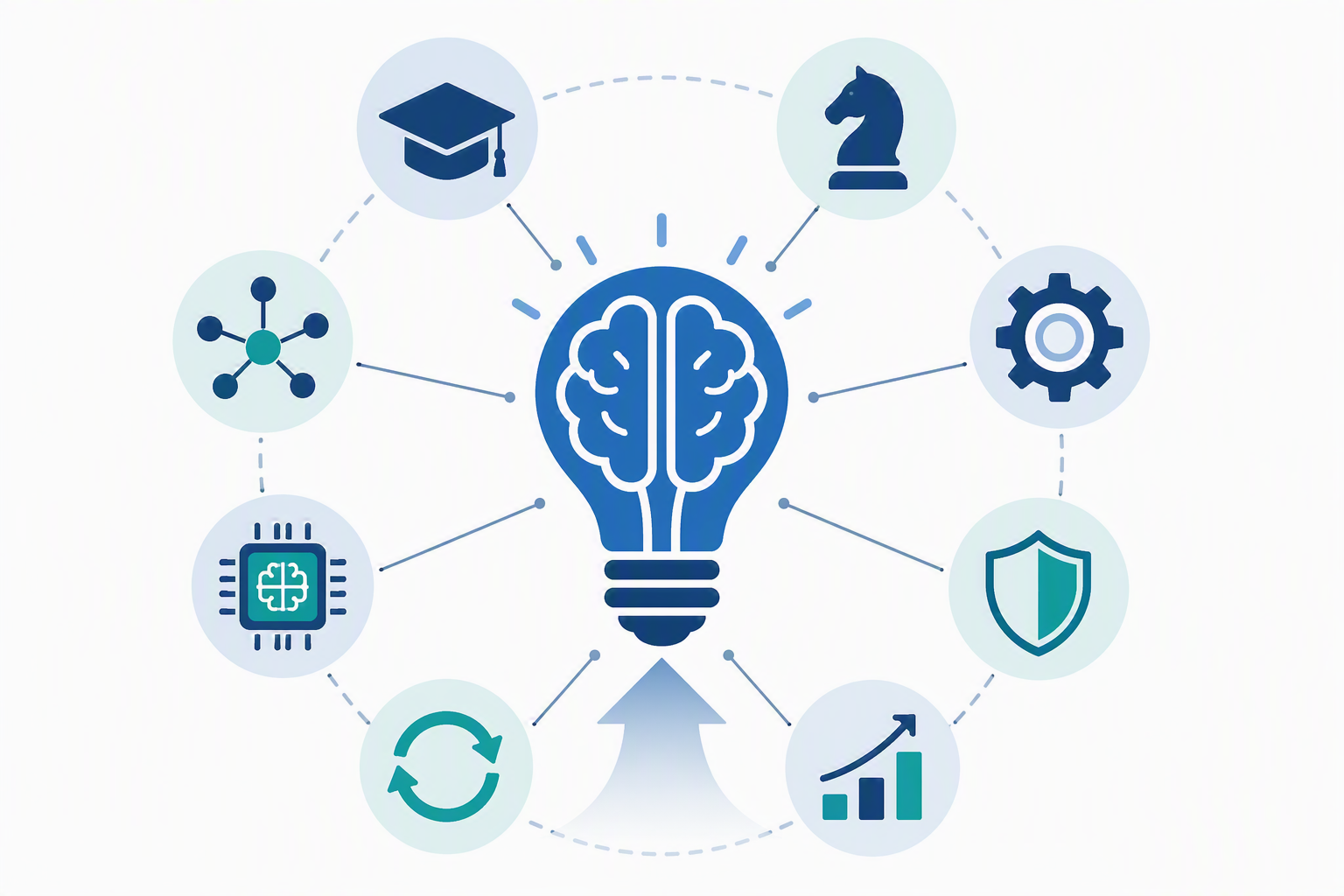
Across Europe, discussions about competitiveness increasingly focus on technology, innovation, and productivity. Yet behind each of these priorities lies a more fundamental asset: people. As economies become more digital, access to skilled talent is emerging as a key factor in determining how successfully countries, organisations and individuals can adapt to change and seize new opportunities.
Recent European policy initiatives have emphasised the importance of strengthening digital skills at all levels of society. The challenge is not simply about producing more technology professionals. Rather, it is about ensuring that citizens, workers, business leaders, educators and public-sector employees possess the capabilities needed to participate effectively in a rapidly evolving digital environment.
As digital tools become more integrated into everyday work, the distinction between “technical” and “non-technical” roles continues to blur.
Economic resilience has traditionally been associated with factors such as infrastructure, investment and access to markets. Today, however, human capital may be growing in significance. Companies facing digital transformation are discovering that success can depend less on acquiring new technologies and more on whether their workforce has the skills to use them effectively. Similarly, countries seeking to enhance productivity and innovation must consider how skills development can support long-term growth.
Malta’s own digital journey reflects this broader European trend. As highlighted in national strategies and sectoral initiatives, strengthening digital capabilities forms part of wider efforts to support innovation, entrepreneurship and economic development. Accordingly, we see the continued expansion of digital services, emerging technologies and data-driven processes opening up new opportunities, while also creating new demands for skills.
For employers, this presents both a challenge and an opportunity. Digital skills are no longer confined to specialist ICT roles. Increasingly, they are becoming relevant across a wide range of professions, from administration and customer service to healthcare, finance, education, and manufacturing. As digital tools become more integrated into everyday work, the distinction between “technical” and “non-technical” roles continues to blur.
At the same time, the nature of digital skills itself is evolving. Competence today extends beyond the ability to operate software or online services. It includes critical thinking, information literacy, cybersecurity awareness, data literacy and the ability to adapt to new technologies as they emerge. Continuous learning is therefore becoming an important component of economic resilience at both organisational and national levels.
If everyone can access similar technologies, what ultimately differentiates high-performing individuals, organisations and economies?
Looking ahead, one question is becoming increasingly important: which skills will matter most in an economy where artificial intelligence is becoming more widely available? While AI is attracting considerable attention, the more significant issue may not be the technology itself, but how individuals and organisations choose to use it. As AI tools become more accessible, understanding the relationship between the value they create and the human expertise which unlocks and maximises that value will become an important capability in its own right.
These questions are likely to shape future discussions on workforce development, innovation policy and digital competitiveness. Building economic resilience will require more than investment in technology alone. It will also require investment in people, ensuring that individuals have the knowledge, confidence and adaptability needed to thrive in a changing digital landscape.
In this context, our view of talent can go beyond the classic performance-based idea of competitive advantage which helps an organisation to win. Indeed, we may find it maturing into a key strategic asset that helps companies remain viable, adaptable and resilient amid uncertainty. The challenge for governments, employers, educators and individuals alike is to ensure that this asset continues to grow alongside the technologies that are transforming our economies.
As access to AI tools becomes increasingly widespread, important questions remain. If everyone can access similar technologies, what ultimately differentiates high-performing individuals, organisations and economies?
In the coming months, we will explore some related questions and consider the factors that support AI adoption and drive its impact.
This document was prepared with the assistance of generative AI tools for editorial support (e.g., language refinement and drafting suggestions). Any AI-generated suggestions were reviewed, edited, and validated by the authors, who remain fully responsible for the final content. Where relevant, AI tools were also used to develop illustrative concepts and image-generation prompts; final selection and inclusion decisions were made by the authors and the publisher.
Views and opinions expressed in this article are those of the author(s) and do not necessarily reflect the official views, positions, policies, or endorsements of the Malta Digital Innovation Authority (MDIA), its management, employees, partners, or affiliates.
This article is based on information gathered from various online sources and intended only for informational purposes. It does not constitute professional advice or recommendations. While the information provided is accurate and true to the best of our knowledge, we make no representations or warranties of any kind, express or implied, regarding the completeness, accuracy, reliability, suitability, or availability of the topics covered. We strongly advise readers to conduct further research and consult appropriate professionals or experts before making any decisions based on the information presented in this article.
We disclaim any liability for losses or damages incurred based on the information provided herein.