-
Image

-
Publish in core platform
Yes
-
Link Type
Organization url
-
Digital technology / specialisation
Artificial Intelligence Digital skillsDigital skill level
Basic Intermediate AdvancedGeographic Scope - Country
European Union MaltaType of initiative
Local initiative

Malta Digital Skills and Jobs Platform (LISP)

Abstract
Large language models are no longer confined to research laboratories. They are embedded in consumer applications and workplace platforms, and they now influence how people write, search, code, and make decisions. This article explains, in plain but rigorous terms, how contemporary generative AI systems work, why the transformer architecture was pivotal, and what changed when model development shifted from open research to commercial competition. It also outlines key societal implications, including education, labour markets, creativity, and governance.
The essential question lately is not whether machines can think. It is whether people can afford to use them without understanding what they are.
Introduction
Artificial intelligence has moved from a specialist topic into everyday life. Tools such as OpenAI’s ChatGPT, Google’s Gemini, Anthropic’s Claude, and Microsoft Copilot are widely used to draft text, summarize information, write software, and support routine communication. Their convenience can obscure an important reality: most users interact with these systems as if they were knowledgeable interlocutors, while having only a limited understanding of the technical and organisational choices that shape their outputs.
From Research to Mass Adoption
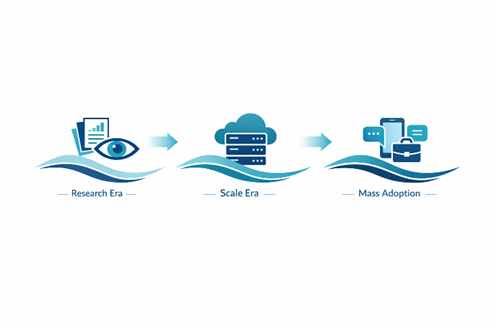
The early decades of AI were defined by intermittent breakthroughs and long periods of incremental progress. The current wave is different because it combines three conditions: vast quantities of digital text, scalable cloud computing, and machine learning techniques that improve predictably with scale. The result is a class of systems that can generate fluent language and, in many contexts, useful explanations, summaries, and code.
At the same time, the centre of gravity has shifted from open academic publication toward commercial development. Many leading organisations still publish research, but they increasingly limit the disclosure of training data, system design details, and optimisation methods. This is partly a response to competitive pressure and intellectual property concerns, and partly a reflection of safety and security considerations. For readers, the practical consequence is that understanding these systems now requires combining public research with careful interpretation of what companies choose to reveal.
How Large Language Models Generate Text
Most contemporary chat-based systems are built on large language models (LLMs). An LLM is trained on massive text corpora and learns to predict the next token in a sequence. A token is typically a short piece of text, often a word, part of a word, or a symbol. During training, the model repeatedly sees sequences of tokens and is penalised when it assigns low probability to the token that actually follows. Over many iterations, this self-supervised objective encourages the model to internalise statistical regularities that reflect grammar, style, and many factual associations present in the data.
Words, Minds, and Machines: The Mirage of ‘Understanding’ in AI Debates

Debates about these systems often rely on words such as thinking, understanding, reasoning, and consciousness. These terms are ill-defined because they do not have a single agreed meaning across philosophy, psychology, neuroscience, and computer science, and because they can refer to different kinds of evidence. In everyday speech they often describe outward behaviour, such as solving problems or explaining decisions, while in scientific and philosophical usage they may refer to internal mechanisms or subjective experience. Since there is no consensus test that cleanly separates these meanings, discussions can slide between them and create the impression that fluent language implies human-like mental states.
This training objective can produce outputs that feel conversational and, at times, insightful. However, next-token prediction does notimply consciousness, intentions, or subjective experience. The model generates text by transforming an input context into a probability distribution over possible continuations. When a response appears to include reasoning, it is best understood as a pattern of language that the model has learned to reproduce because it correlates with successful continuations in its training data and subsequent fine-tuning.
The Transformer Breakthrough
Modern LLMs are typically based on transformer neural networks, introduced in 2017 in the paper Attention Is All You Need. The transformer replaced strictly sequential processing with self-attention, a mechanism that allows the model to weigh relationships among tokens in a passage in parallel. This design made it easier to model long-range dependencies in text and to train large models efficiently on modern accelerators.
A transformer contains many adjustable numerical parameters, often called weights. During training, optimisation methods such as gradient descent and backpropagation adjust these weights to reduce prediction errors across billions of examples. As this process converges, the model develops internal representations that support a range of downstream behaviours, including summarisation, translation, and code generation. Researchers still debate how best to interpret these representations and why certain capabilities appear abruptly as models scale.
Training at Scale and the Compute Supply Chain
Training frontier models requires substantial computational resources. Large runs commonly rely on clusters of specialised accelerators, most often GPUs, connected by high-bandwidth networks. Vendors such as NVIDIA manufacture many of the accelerators used in these clusters, and large cloud providers integrate them into data centres designed for intensive parallel computation. At this scale, hardware availability, energy consumption, cooling, and networking become constraints that influence which organisations can train and operate the largest models.
Model capability has also improved through methods beyond raw scale. Fine-tuning adapts a general model to specialised tasks or organisational contexts. Retrieval-augmented generation combines model outputs with searches over external collections, which can improve factuality when the retrieved sources are reliable. Many systems are also multimodal, meaning they can process combinations of text, images, audio, or code, although the core language component still typically rests on transformer-based modelling.
Openness, Intellectual Property, and Transparency

Historically, much AI progress was documented through peer-reviewed papers and open-source implementations. That practice continues, especially in universities and in parts of industry research. Yet several high-performing commercial systems are released with limited technical detail. Training data is often undisclosed, model weights may be withheld, and safety-related mechanisms can be described only at a high level. This reduces independent scrutiny and makes it harder for outsiders to assess bias, security properties, and the provenance of training material.
Restricted disclosure is not only about protecting commercial advantage. Developers also face real concerns about misuse, including automated phishing, malware generation, and large-scale misinformation. The challenge for policy is to encourage transparency that enables accountability and scientific evaluation, while recognising legitimate security and safety constraints.
Emergent Behaviour and the Question of General Intelligence
As language models increase in scale, researchers have reported so-called emergent abilities: behaviours that are weak or absent in smaller models but become noticeably stronger in larger ones. Published work describes this as an evaluation effect where performance appears to change sharply once a model crosses certain thresholds of scale and training. The phenomenon is debated, but it remains influential in how organisations forecast future capability.
This discussion connects to the concept of artificial general intelligence (AGI), usually defined as a system able to perform a broad range of intellectual tasks at or above human level. Whether current approaches can reach AGI through scaling alone is an open question. Some researchers argue that general competence may emerge from sufficiently capable information-processing systems, while others contend that today’s models remain limited by their dependence on training distributions and by their lack of grounded understanding.
Societal and Policy Implications
Work, Productivity, and New Roles
Generative AI can automate or accelerate routine cognitive tasks such as drafting, classification, transcription, and first-pass analysis. This is likely to reshape clerical and professional workflows rather than eliminate them uniformly. In parallel, new roles are maturing, including machine learning operations, AI security, model evaluation, and AI governance. Organisations that adopt these tools effectively will usually pair them with clear accountability, human oversight, and staff training.
Science and Healthcare
Machine learning is already used in research domains such as medical imaging, drug discovery, and computational biology. In many cases, these systems act as decision-support tools that help scientists and clinicians triage information or generate hypotheses. The strongest results typically come from combining AI outputs with domain expertise, high-quality data, and robust validation.
Education and Assessment
AI-assisted tutoring and feedback can support personalised learning, particularly for drafting and language practice. At the same time, easy access to generative text challenges traditional assessment models. Educational institutions will likely need to adapt by emphasising in-class work, oral assessment, process-based evaluation, and explicit instruction on how to use AI responsibly.
Creativity and Cultural Production
Generative systems can produce text, images, and music quickly, and many creators use them as ideation tools. Concerns remain about labour displacement, attribution, and the use of copyrighted training material. Clear labelling, licensing models, and provenance tracking are emerging responses, but the norms are still evolving.
Governance, Safety, and Trust
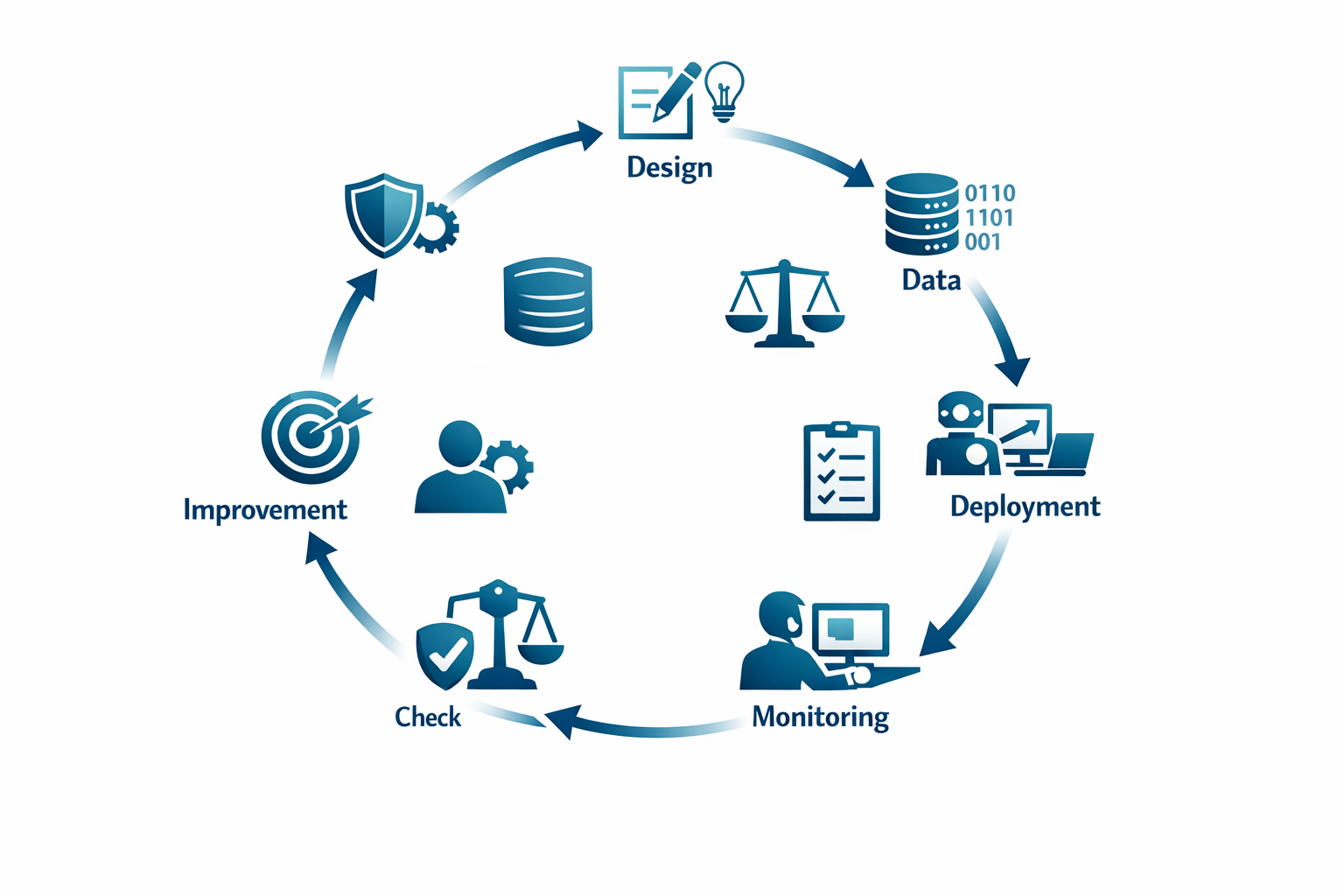
As these systems become embedded in public services and enterprise workflows, governance becomes a core requirement. Key issues include data protection, security of prompts and outputs, bias and discrimination, explainability where decisions affect rights, and resilience against misinformation. Regulators and standards bodies are responding with frameworks that emphasise risk management, transparency, human oversight, and accountability across the AI lifecycle.
Conclusion
Large language models are best viewed as powerful statistical engines for language that have been shaped by scale, data, and fine-tuning, and then packaged into products that influence daily work. Their outputs can be helpful, but they can also be confidently wrong, biased by training data, or misapplied in high-stakes contexts. A basic grasp of how these models are trained and how they generate text helps users evaluate responses more critically and use the tools more responsibly.
The next phase of AI will be shaped as much by governance, institutional choices, and public expectations as by technical progress. If societies want the benefits of these systems without unacceptable risks, they will need informed users, capable organisations, and policies that reward transparency and accountability. Understanding, rather than passive adoption, is the most practical starting point.
References and Further Reading
The following sources provide accessible entry points into the technical foundations and governance debates surrounding large language models and related systems.
- Vaswani, A., Shazeer, N., Parmar, N., Uszkoreit, J., Jones, L., Gomez, A. N., Kaiser, L., and Polosukhin, I. (2017). Attention Is All You Need. arXiv:1706.03762.
- Brown, T. B., Mann, B., Ryder, N., Subbiah, M., Kaplan, J. D., Dhariwal, P., and others. (2020). Language Models are Few-Shot Learners. arXiv:2005.14165.
- Lewis, P., Perez, E., Piktus, A., Petroni, F., Karpukhin, V., Goyal, N., and others. (2020). Retrieval-Augmented Generation for Knowledge-Intensive NLP Tasks. arXiv:2005.11401.
- Bommasani, R., Hudson, D. A., Adeli, E., Altman, R., Arora, S., and others. (2021). On the Opportunities and Risks of Foundation Models. arXiv:2108.07258.
- Wei, J., Tay, Y., Bommasani, R., Raffel, C., Zoph, B., and others. (2022). Emergent Abilities of Large Language Models. arXiv:2206.07682.
- Bender, E. M., Gebru, T., McMillan-Major, A., and Shmitchell, S. (2021). On the Dangers of Stochastic Parrots: Can Language Models Be Too Big? Proceedings of the ACM Conference on Fairness, Accountability, and Transparency (FAccT).
- Tabassi, E. (2023). Artificial Intelligence Risk Management Framework (AI RMF 1.0). National Institute of Standards and Technology (NIST AI 100-1).
- OECD (2019). OECD Principles on Artificial Intelligence. Organisation for Economic Co-operation and Development.
Editorial Disclaimer
This document was prepared with the assistance of generative AI tools for editorial support (e.g., language refinement and drafting suggestions). Any AI-generated suggestions were reviewed, edited, and validated by the authors, who remain fully responsible for the final content. Where relevant, AI tools were also used to develop illustrative concepts and image-generation prompts; final selection and inclusion decisions were made by the authors and the publisher.
This article is based on information gathered from various online sources and intended only for informational purposes. It does not constitute professional advice or recommendations. While the information provided is accurate and true to the best of our knowledge, we make no representations or warranties of any kind, express or implied, regarding the completeness, accuracy, reliability, suitability, or availability of the topics covered. We strongly advise readers to conduct further research and consult appropriate professionals or experts before making any decisions based on the information presented in this article.
We disclaim any liability for losses or damages incurred based on the information provided herein