-
Image
-
Publish in core platform
Yes
-
Link Type
Organization url
-
Digital technology / specialisation
Digital skillsDigital skill level
Basic Intermediate AdvancedGeographic Scope - Country
Non-EU European UnionType of initiative
EU institutional initiative

Malta Digital Skills and Jobs Platform (LISP)


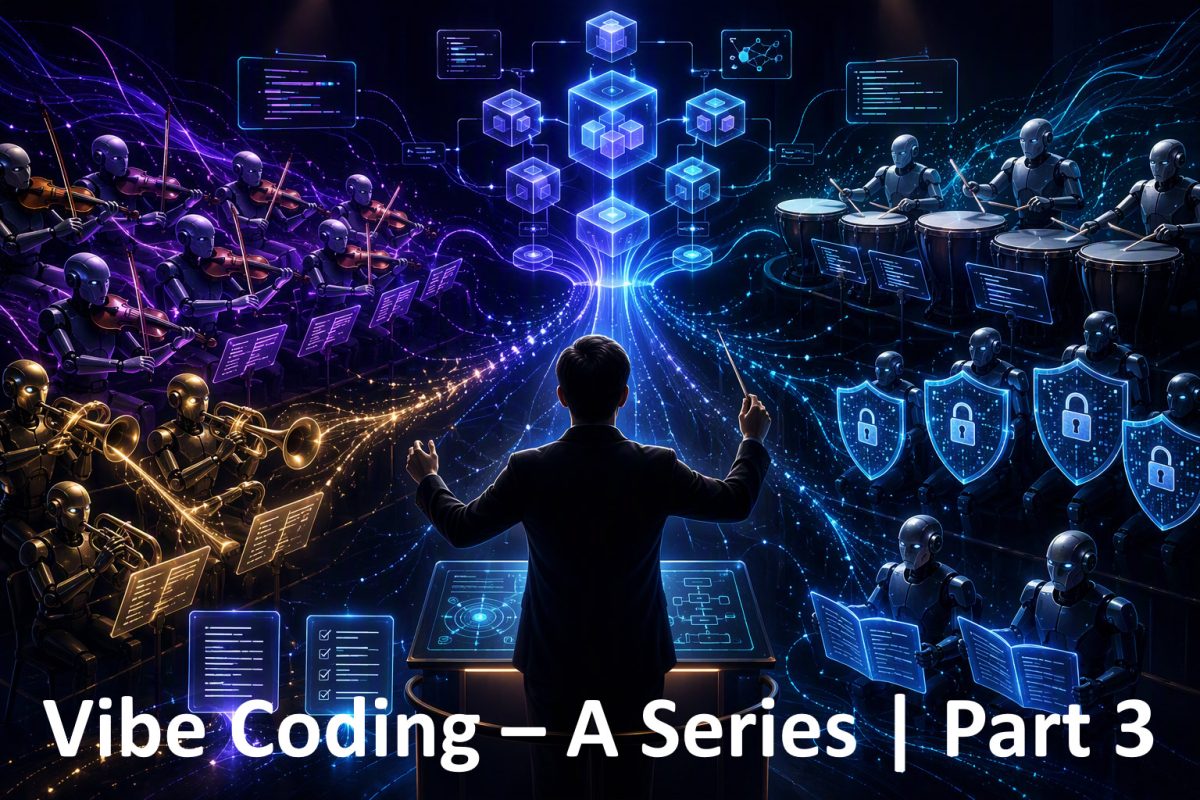
Software development is undergoing a quiet but significant shift. Among the latest trends shaping the industry is vibe coding. This is a term used to describe a style of programming where developers rely heavily on artificial intelligence to generate code based on natural-language instructions. Rather than manually writing every line of code, the developer focuses on expressing intent, logic, and desired outcomes, while AI systems handle much of the implementation.
At a practical level, vibe coding replaces detailed syntax work with conversational prompts. A developer might describe a feature, workflow, or user interaction in plain language, and an AI tool produces the corresponding code. The human then reviews, adjusts, and refines the output through further prompts. This creates a highly iterative, creative process that feels closer to collaboration than traditional programming.
Adoption and Who Is Using It
Vibe coding is being taken up across a broad range of users. Experienced software engineers often use it as a productivity booster, especially for repetitive tasks, prototyping, or exploring alternative solutions. By offloading routine coding to AI, they can focus more on system design, architecture, and problem-solving.
At the same time, vibe coding has opened the door to a new category of creators. Entrepreneurs, designers, students, and hobbyists with limited technical backgrounds are now able to build functional software products. This has lowered the barrier to entry for digital innovation, enabling people with strong ideas but limited coding expertise to turn concepts into working applications.
Younger users in particular are embracing vibe coding as a learning and experimentation tool. For them, AI-assisted development feels intuitive and empowering, offering a way to engage with technology creation without first mastering complex programming languages.
Key Benefits
One of the main advantages of vibe coding is speed. Development cycles can be significantly shortened, especially in early stages. Features that once took days to implement can now be scaffolded in minutes. This rapid iteration encourages experimentation and reduces the cost of failure.
Another benefit is accessibility. Vibe coding makes software creation more inclusive, allowing people from non-technical disciplines to participate meaningfully in digital projects. It also helps experienced developers stay “in flow” by reducing friction caused by boilerplate code and repetitive tasks.
From an organisational perspective, vibe coding can improve efficiency. Teams can move faster, prototype more ideas, and reduce backlogs, especially when AI is used thoughtfully as a support tool rather than a replacement for human judgment.
Risks and Limitations
Despite its appeal, vibe coding carries notable risks. AI-generated code is not always robust, secure, or efficient. Without careful review, it can introduce hidden vulnerabilities, performance issues, or logic errors. Over-reliance on AI may also lead to a shallow understanding of the codebase, making maintenance and debugging more difficult over time.
When code is generated quickly without strong architectural oversight, systems can become harder to scale and evolve. In critical or regulated environments, this poses serious operational and security concerns.
There is a worry that vibe coding could erode foundational software engineering skills if not balanced with proper training and discipline.
Impact on the Software Development Industry
Vibe coding is already influencing how software teams work. Development environments are increasingly built around AI assistance, and roles are evolving. Greater value is being placed on skills such as system thinking, prompt design, code review, and ethical oversight, rather than raw coding speed alone.
For the industry, this shift suggests a move away from viewing software development as purely a technical craft, toward seeing it as a collaborative, human-AI process.
Looking Ahead
Vibe coding is unlikely to replace traditional software engineering, but it will almost certainly become a permanent part of it. In the future, it is expected to be widely used for prototyping, internal tools, and early-stage development, while mission-critical systems will continue to require strong human control, testing, and validation.
Ultimately, vibe coding’s success will depend on how responsibly it is adopted. Used wisely, it can amplify creativity and productivity. Used carelessly, it risks undermining quality and trust. As with many AI-driven shifts, the challenge lies not in the technology itself, but in how humans choose to use it.