-
Image
-
Publish in core platform
No
-
URL
https://op.europa.eu/en/publication-detail/-/publication/b955acdc-2999-11f0-8a44-01aa75ed71a1
-
Link text
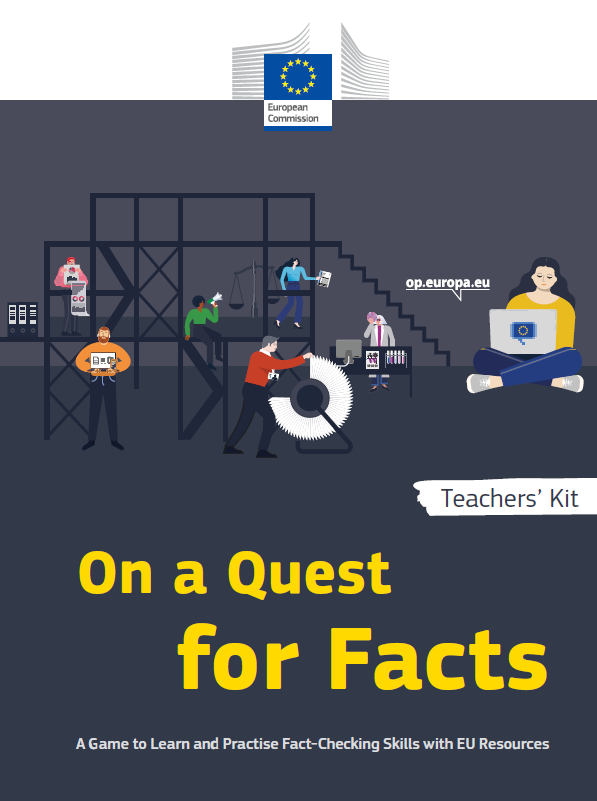
Finding the facts: A game of learning and practicing fact-checking skills using EU resources: teacher's kit
-
Link Type
Skills resource url
-
Target audience
Digital skills in education.Digital technology / specialisation
Digital skillsDigital skill level
BasicGeographic Scope - Country
European UnionIndustry - Field of Education and Training
Education not further definedTarget language
EnglishType of initiative
EU institutional initiative
Event setting
Methodology (Long text)
Set for teachers
Skills resource type
Other training material
Target group
Persons in secondary/compulsory education #NotOnOurFeed Toolkit September 29, 2026
 ENISA Threat Landscape 2026 September 28, 2026
 Special panel on child safety online report September 28, 2026
 Skip to content

Malta Digital Skills and Jobs Platform (LISP)

The Publications Office of the European Union recently published a resource entitled ‘Finding the facts: A game of learning and practicing fact-checking skills using EU resources: teacher’skit.
This classroom activity, aimed at students aged 16 to 18, is designed to teach critical thinking, fact-checking and the use of EU resources. The game focuses on a fictional social media post and requires students to investigate and resolve false claims with the help of six engaging EU-themed characters.
Learning objectives
Participating in this activity will be students:
- Learn and practice fact-checking skills
- Discover reliable EU sources on EU law, data, publications and other information
- Understand how false information can distort facts and harm public understanding
- Collaborate effectively as a team to solve complex problems
Structure of the game
The game lasts one hour, during which students will be divided into teams of 5 or 6. Each team will investigate a number of claims made in a fictitious social media post with the help of six EU figures directing them to appropriate sources.
After the game is over, teams of students are invited to inform and reflect on their experiences during a joint session. This helps students consolidate their learning and think about the skills they have developed.
The kit is available in English and French and is freely available for download on the website of the Publications Office of the European Union.

