-
Image
-
Publish in core platform
No
-
URL
https://www.oecd.org/en/publications/oecd-youth-policy-toolkit_74b6f8f3-en.html
-
Link text
OECD Youth Policy Toolkit
-
Link Type
Same as url
-
Target audience
Digital technology / specialisation
Artificial IntelligenceDigital skill level
BasicGeographic Scope - Country
European UnionIndustry - Field of Education and Training
Target language
Type of initiative
International initiative
Event setting
Skip to content

Malta Digital Skills and Jobs Platform (LISP)

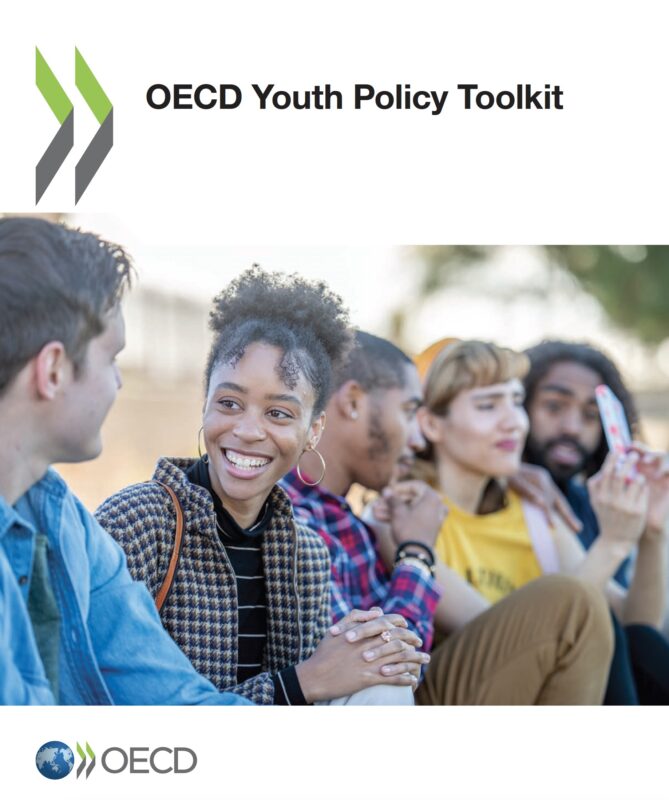
The ‘Youth Policy Toolkit’ is an annual publication by the OECD (Organisation for Economic Cooperation and Development) that collects good practices to guide policymakers to address the unique challenges young people face today. Its 2024 edition, published in November the same year acknowledges a new need central to reinforcing democracy and fast emerging in Europe and abroad: that of strengthening the trust young people have in government, as well as their relationship and attitude towards public institutions.
‘‘For the times they are a-changin’’
We are no doubt living in a fast-paced world that is being transformed before our very eyes – and even though Bob Dylan’s lyrics we sneakily quoted above were written in the 60s, they ring even truer now. Not only do we witness trends changing every minute, but different gaps (especially ones in the social sphere or education) appear more pronounced. This poses a set of distinct, yet unknown challenges for policymakers, who now have to draw plans to address inequality silos and design policies that help to upskill everyone, and in a way that is not detrimental to economic growth. Ensuring no European citizen is left behind is at the forefront of the Digital Education Action Plan and also lies at the core of the EU Digital Decade and its target of seeing 80% of Europeans digitally-literate by 2030. The OECD’s toolkit is part of the organisation’s larger workflow directed at up- and re-skilling a future-proof global workforce that can withstand and capitalise on the challenges of the twin digital and green transition.
‘‘Forever young’’ ? Challenges impacting young people
At the same time, young people face their own unique set of challenges of diverse nature (demographic, environmental, etc). The European continent is aging: estimates by Eurostat project a 6% decrease in the EU-27 population between 2022 and 2100, equivalent to a loss of 27.3 million people. The World Bank also notes that environmental disasters cause devastation for everyone, but disproportionately impact Europe’s most vulnerable communities, increasing poverty and inequality. The OECD notes that young people are often the first ones to lose their jobs in large-scale, major crisis events (think COVID-19), as they usually tend hold temporary contracts that grant them fewer rights.
Allowing young people to thrive in the labour market is a must and can act as a temporary relief in difficult, crisis situations – but only if they are equipped with the right skills to breeze through the challenges they encounter. This means the transition between education and the world of work has to be smoother, with fewer barriers to employment and graduates with practical, hands-on skillsets. The figure below shows the current state of play with NEET rates for 15-29 year-olds, i.e. young people not in employment, education or training for 2023.

If the goal is to equip people all over the world with digital skills but we are still in the dark on how exactly to go about it, then the OECD Youth Toolkit shines a flashlight up front. OECD’s toolkit contains a range of good practice examples from 38 countries – not limited to digital literacy, but also covering fields like education, employment and social inclusion, health, or public governance and security. The examples reflect the diverse attitudes belonging to young people, which are dependant on personal and national circumstances, socio-economic background, gender, race or ethnicity, or country of origin.
Dive into the OECD Youth Policy Toolkit – download it here!