-
Image
-
Publish in core platform
No
-
Link Type
Organization url
-
Target audience
Digital technology / specialisation
CybersecurityDigital skill level
IntermediateGeographic Scope - Country
CroatiaIndustry - Field of Education and Training
Target language
Type of initiative
National initiative
Event setting
Skip to content

Malta Digital Skills and Jobs Platform (LISP)

In the application of the Cyber Security Act, it is important to ensure a balance between new obligations for entrepreneurs and the necessary investments in strengthening cyber security standards, where the new regulation is an opportunity to further stimulate the domestic ICT sector, which already has developed knowledge and solutions to strengthen cyber security that are competitive on a global level
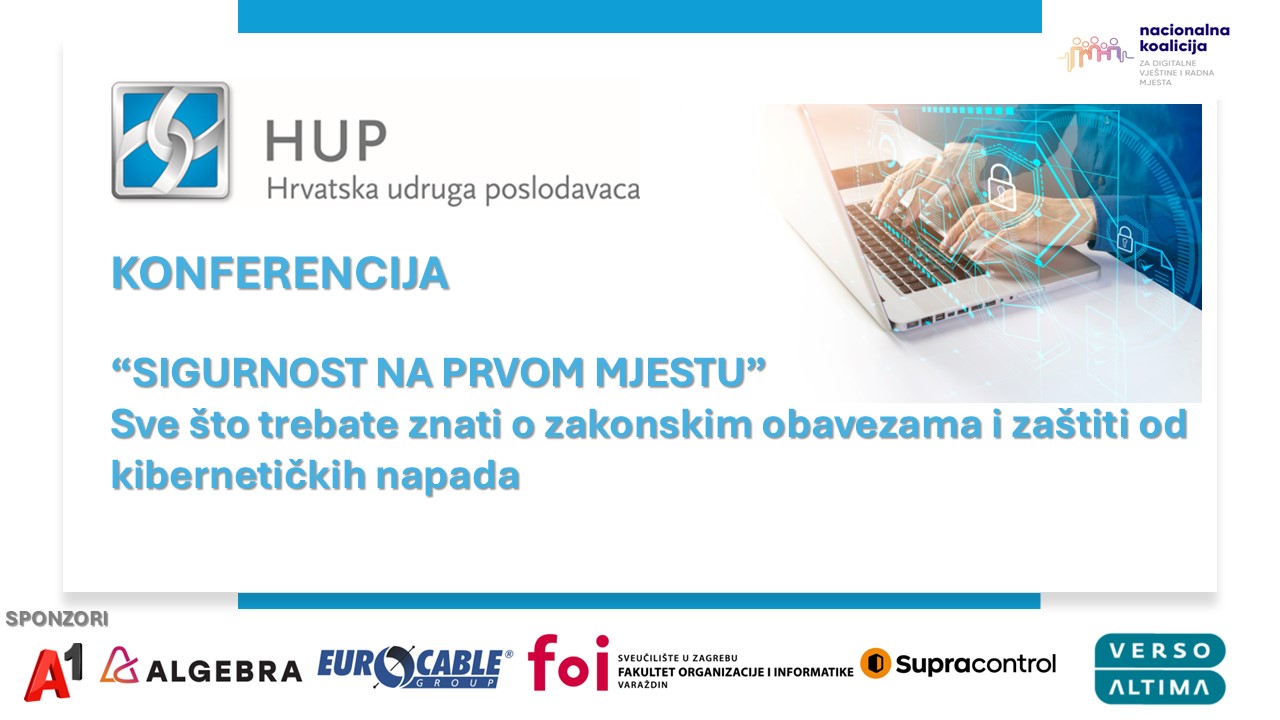
Zagreb, 28 August 2024 – The regulatory framework on cybersecurity implementing the NIS2 EU Directive in Croatia raises awareness of business security in the digital space and the necessity of implementing cybersecurity measures should be applied taking into account the necessary levels of entrepreneurial investment, which according to global practice vary from 7 percent of the total IT budget for an average company to 10 percent for highly digitized companies, is the message from the conference on cybersecurity held today organized by the HUP-ICT entitled “Security first – everything you need to know about legal obligations and protection against cyber attacks”.
The conference brought together over 300 entrepreneurs and representatives of the Security and Intelligence Agency (SOA), the Croatian National Bank (HNB), the Croatian Financial Services Supervisory Agency (HANFA), the Ministry of Economy, the Croatian Regulatory Authority for Network Industries (HAKOM), the Institute for Information Systems Security (ZSIS) and the Croatian Academic and Research Network (CARNET), together with representatives of domestic companies engaged in the development of cybersecurity solutions, as well as representatives of the academic community. The conference was enhanced by General Ivan Pokaz, envoy of the Minister of Croatian Veterans’ Affairs and Deputy Prime Minister of the Republic of Croatia Tom Medved.
Watch the video from the conference here: KIBERNETIC SECURITY HUP CONFERENCE: Everything you need to know to protect yourself from cyberattacks – YouTube
Croatia received a new Cyber Security Act in February this year, and the bylaws that will define concrete requirements in the context of strengthening cyber security for the private and public sectors are currently being elaborated. The regulations will expand the scope of the sector, from the previous 7 to a total of 19 critical sectors such as energy, transport, health, water, digital infrastructure, education, postal and courier services and the public sector. The regulation aims to raise the level of cybersecurity of the entire business of companies, including their supply chains. The Regulation on Cyber Security, which is being worked on by the Interdepartmental Working Group led by SOA, as the central state body for cyber security, and which includes experts from the CEA, is expected in the public debate in September, and will define concrete requirements for companies depending on their classification on key and important entities, i.e. to which sector they belong and the size of the entity.
The HUP emphasized that it is important to ensure a balance between new obligations for entrepreneurs in terms of investment and raising the overall standard of cybersecurity in Croatia, in a way that new obligations for entrepreneurs are proportionate not only to the size of the company but also to the type of business and take into account the current cyber exposure of the company. Also, the HUP sees a significant opportunity to encourage the domestic ICT sector through regulation, which already has developed knowledge and solutions to strengthen cyber security that are also competitive on a global level.
“The cooperation between the CEA, the Government and the institutions involved in the drafting of regulations achieved in this legislative process is a guarantor to ensure the quality implementation of the new Cyber Security Act. The goal is to simultaneously raise the level of cyber security in Croatia, strengthen the resilience of critical systems, encourage the development of domestic companies that already have developed products and knowledge in the field of cyber security, while making sure that all together does not lead to an unnecessary burden on the economy. And the knowledge and experience of the domestic ICT sector is invaluable. Croatia has an extremely strong ICT sector with over 8,000 entrepreneurs and almost 55,000 employees, which not only stands out in our economy with growth and added value, but has become its catalyst. A quality regulatory environment for cyber security can be a new impetus for domestic service developers who can benefit domestic entrepreneurs, but who are already presenting global products today”,said Irena Weber, Director General of the HUP.

The new regulation places emphasis on cyber security risk management measures and the obligation to notify competent authorities of significant incidents and serious cyber threats, and on the need to conduct a self-assessment and audit process.
During the conference, the National Coalition for Digital Skills and Jobs and the Working Group on Cyber Security within the CEA and, which brings together over 80 experts from CEA member companies, were presented. This group will play a key role in providing advisory and implementation support to entrepreneurs in adapting to the new regulations.