-
Image
-
Publish in core platform
No
-
URL
https://www.oecd.org/en/publications/agentic-ai-in-organisations_1257a26f-en.html
-
Link text
Agentic AI in Organisations
-
Link Type
Skills Intelligence publication url
-
Target audience
Digital skills for the labour force.Digital technology / specialisation
Artificial IntelligenceDigital skill level
BasicGeographic Scope - Country
European UnionIndustry - Field of Education and Training
Generic programmes and qualifications not further definedTarget language
Type of initiative
International initiative
Event setting
Publication type
General guidelines Lifelong career guidance in the new world of work October 19, 2026
 Research and Innovation Careers Observatory 2026 October 2, 2026
 Inclusion at the core of future-proof VET in Europe September 25, 2026
 Future-proofing VET in Europe – Progress, challenges and policy directions September 18, 2026
 Unpacking Place Transformation September 18, 2026Skip to content

Malta Digital Skills and Jobs Platform (LISP)

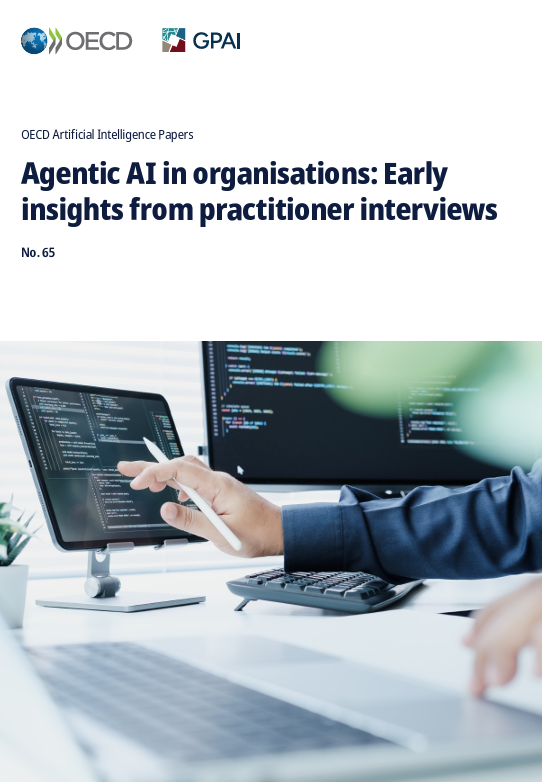
This OECD paper examines how agentic AI is moving from experimentation into practical use, drawing on interviews with 25 organisations across different sectors and regions. Applications include enterprise productivity, customer support, legal work, software development, cybersecurity, supply-chain management and scientific research. Organisations are adopting these systems to improve efficiency, reduce costs, address workforce constraints and create new opportunities, although their levels of deployment vary considerably.
The findings suggest that agentic AI is currently most suitable for structured tasks where outcomes can be verified and risks are manageable. Organisations generally introduce autonomy gradually, retaining human approval for consequential decisions. Preparing employees for these changes is also important, with growing interest in helping staff use and build with AI regardless of their technical background. While these systems may support skills development and provide more actionable insights, excessive reliance on AI could weaken expertise, critical thinking and opportunities for learning through experience.
Major challenges remain, including unpredictable behaviour, cybersecurity vulnerabilities, data governance, accountability and difficulties evaluating system performance. Organisations are responding through human oversight, restricted permissions, testing, monitoring and other technical safeguards. The paper concludes that governance must evolve alongside the technology, with stronger evaluation methods and clearer accountability as systems become more autonomous.
