-
Image

-
Publish in core platform
Yes
-
Link Type
Organization url
-
Digital technology / specialisation
Digital skillsDigital skill level
Basic Intermediate AdvancedGeographic Scope - Country
MaltaType of initiative
Local initiative

Malta Digital Skills and Jobs Platform (LISP)


At the age of fifteen or sixteen, young people are often asked a question that even many adults struggle to answer:
“What do you want to do with your life?”
Behind that question lies an enormous amount of expectation. Students may feel that they are being asked to select not simply a subject or course, but the direction of their entire future. Parents naturally want their children to make sensible choices. Educators want to guide them towards opportunities in which they can succeed. At such a formative age, the road ahead can appear uncertain, complicated and, at times, overwhelming.
This is why events such as I Choose are so important.
Organised by the Ministry for Education and Sport, the I Choose Post-Secondary Education Fair was held on 24 July 2026 at the Grand Hotel Excelsior Malta. It was specifically intended to give Year 11 students an opportunity to explore the educational and career options available to them as they leave compulsory education. Importantly, the event also recognised the concerns of parents whose children may be standing at a crossroads and trying to make an informed decision about their future.
The true value of such an event extends far beyond the information found on stands, in prospectuses or within presentations. Its deeper purpose is to help young people understand that choosing a direction does not mean having to predict every step of their lives.
The Career I Never Planned
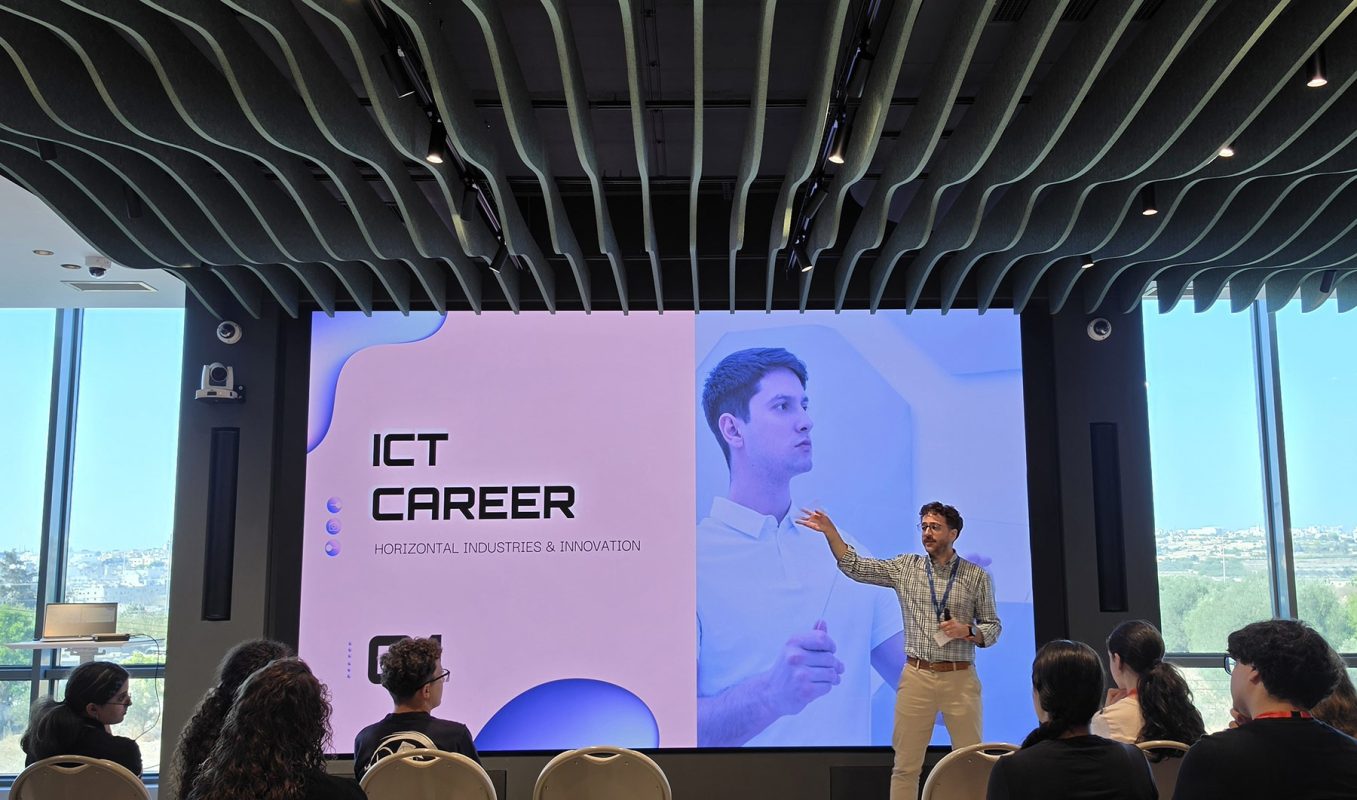
During the event, I delivered a presentation entitled “The Career I Never Planned.”
That title reflects my own experience. I did not begin my career in information and communications technology with a perfect plan. I did not possess a detailed map showing every qualification, role and opportunity that would eventually follow. I simply enjoyed technology, creativity, problem-solving and, perhaps unexpectedly, esports and gaming.
World of Warcraft encouraged me to understand how to assemble my first computer. Call of Duty motivated me to learn how to connect my first local area network. YouTube videos and technology forums demonstrated that, with sufficient curiosity and persistence, it is possible to learn almost anything. These interests may once have appeared to be little more than hobbies, but they became gateways to knowledge, skills and eventually a profession.
One opportunity led to another, from working with networks and infrastructure to managing major digital projects and helping organisations adopt emerging technologies. Along the way, I came to understand that ICT is not simply about computers. It is about applying technology to real challenges and improving people’s lives.
The lesson I wanted young people to take away was simple:
You do not need to see the entire road ahead. Begin with curiosity, learn one skill and take the first step.
Young People Need Inspiration, Not Only Information
Career guidance is sometimes approached as an exercise in matching subjects to occupations. Information is certainly necessary. Students need to understand entry requirements, qualifications, employment opportunities and the realities of different professions.
But information by itself is not always enough.
Young people also need inspiration. They need to meet people who demonstrate that careers are rarely perfectly straight lines. They need to hear that uncertainty is normal, interests can evolve, and an unexpected beginning can still lead to a meaningful destination.
A young person may not remember every course title discussed during a careers fair. They may remember the professional who made them believe that they were capable of entering a particular field. They may remember the conversation that helped them recognise that creativity belongs in technology, that communication matters in engineering, or that gaming can introduce skills in coding, networking, storytelling, design and teamwork.
Sometimes, a single conversation gives a young person permission to imagine a future they had never previously considered. That is the real power of events such as I Choose.
The Role of Parents
Parents understandably want security for their children. They may encourage careers that appear stable, respected or financially rewarding. This comes from care and from a desire to protect their children from unnecessary hardship.
Young people also need space to discover what genuinely interests them.
The role of a parent is not necessarily to select the destination, but to help the young person develop the confidence and judgement needed to navigate the journey. This means listening carefully, asking questions and recognising interests that may not immediately resemble traditional career preparation.
A fascination with video games could develop into software development, animation, sound design, cybersecurity, network engineering or immersive technology. An interest in social media may lead towards digital marketing, content production or user-experience design. A love of drawing may become a foundation for digital design, three-dimensional modelling or interactive media.
Parents should therefore look beyond the surface of an interest and ask:
What is my child learning through this activity? What keeps them curious? What problems do they enjoy solving?
Not every hobby must become a career. However, interests often reveal where a young person’s natural energy, creativity and willingness to persevere can be found.
The Responsibility of Educators
Educators hold an equally important responsibility.
Education should prepare students for examinations, but it should also help them understand themselves. Schools should create opportunities for experimentation, collaboration, practical problem-solving and exposure to different professions.
A student’s potential cannot always be captured through one examination result. Some students discover their abilities through building, designing, presenting, organising, coding, repairing or helping others. Career education must recognise multiple forms of intelligence and achievement.
Today’s careers are also increasingly multidimensional. ICT alone includes hardware, software and services, with roles that may be highly technical, largely non-technical or positioned somewhere between the two. Opportunities exist in software development, networks, cybersecurity, artificial intelligence, data, digital media, gaming and immersive technologies. People may progress from operational positions into supervisory, managerial, advisory or entrepreneurial roles.
Educators should not merely prepare students for one job title. They should help them develop adaptable capabilities: critical thinking, problem-solving, communication, creativity, teamwork, storytelling and curiosity.
These capabilities remain valuable even as technologies, industries and individual ambitions change.
Fun Is Not the Opposite of Serious Work
One of the most important messages in my presentation was that a career should, as far as possible, contain an element of enjoyment.
In professional and educational discussions, fun is sometimes treated as something frivolous. Young people may be told to stop playing and start thinking seriously about their future. But enjoyment and seriousness are not opposites.
Fun creates curiosity. Curiosity encourages practice. Practice develops competence. Competence builds confidence. Over time, confidence can create opportunity.
This does not mean that every working day will be easy or entertaining. Every worthwhile career demands discipline, patience, continuous learning and a willingness to overcome difficulty. Following what matters to you does not remove the need for effort. It gives that effort a purpose.
When people care about what they are doing, they are more likely to continue learning after a setback, experiment with new ideas and invest the time required to improve. Fun can therefore be the starting point of mastery rather than a distraction from it.
My presentation highlighted critical thinking, problem-solving, storytelling, creativity, teamwork, reading, curiosity, communication and a willingness to work. But the final message was equally important, it must also be something you like.
A Choice Is a Beginning, Not a Final Verdict
The name I Choose carries an important message of personal responsibility. Young people must gradually learn to make decisions about their education and future.
We should be careful not to present their first choice as permanent or irreversible.
People grow. Industries change. New technologies emerge. Opportunities appear that did not exist when someone first selected their subjects. A person may begin in a technical role and later move into management, entrepreneurship, education or public service. Another may combine technology with healthcare, art, finance, manufacturing or environmental sustainability.
A choice should therefore be understood as a direction rather than a lifelong restriction.
The purpose of career guidance is not to eliminate every uncertainty. That would be impossible. Its purpose is to help young people make the best decision they can with the knowledge, interests and opportunities currently available to them and to give them the adaptability to reconsider that decision when necessary.
Our Collective Responsibility
Inspiring young people cannot be the responsibility of schools alone. Parents, educators, employers, public institutions and professionals all have a role to play.
We must make careers visible. We must share honest stories, including the mistakes, changes of direction and unexpected opportunities. We must allow young people to ask basic questions without embarrassment and ambitious questions without being discouraged.
Most importantly, we must avoid defining success too narrowly.
Success is not simply choosing the most prestigious course or obtaining the highest-paying position. It is building a life in which ability, contribution, personal values and a sense of purpose can coexist.
The future facing today’s young people will not be predictable. They will work in professions that continue to evolve and, in some cases, in roles that have not yet been created. Their greatest advantage will not be possessing a perfect plan. It will be their ability to remain curious, continue learning and adapt with confidence.
Events such as I Choose matter because they create the space in which that process can begin.
They tell young people that it is acceptable not to have every answer. They show parents that guidance can be supportive without becoming restrictive. They remind educators that inspiration can be as important as instruction.
The future is not a straight road waiting to be followed. It is something that every young person will gradually build through choices, experiences, relationships, failures and discoveries.
As I told the students during my presentation:
Your future is like a giant colouring book. Choose the colours that make you happy.