-
Image
-
Publish in core platform
No
-
URL
-
Link text
New AI Literacy Framework helps schools prepare learners for the age of artificial intelligence
-
Link Type
Background information url
-
Target audience
Digital technology / specialisation
Artificial IntelligenceDigital skill level
BasicGeographic Scope - Country
European UnionIndustry - Field of Education and Training
Target language
Type of initiative
EU institutional initiative
Event setting
Skip to content

Malta Digital Skills and Jobs Platform (LISP)

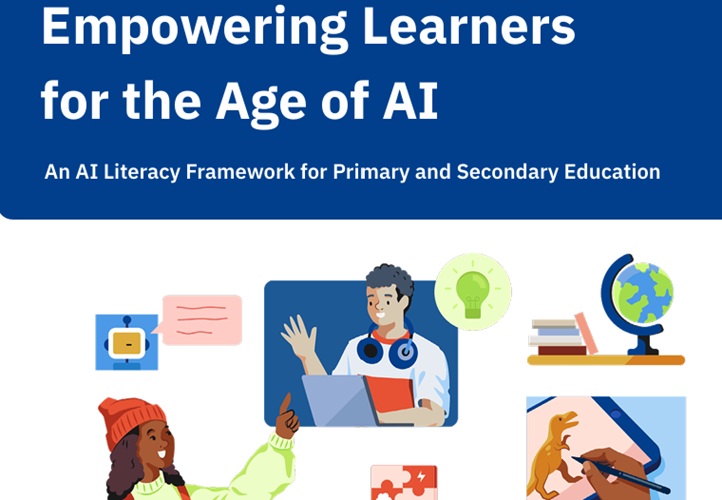
On 18 June, the European Commission and the Organisation for Economic Cooperation and Development (OECD) unveiled the AI Literacy (AILit) Framework for primary and secondary education, providing a common reference to help schools integrate AI literacy into teaching.
Developed with international experts (including CodeAI), the framework is accompanied by practical classroom examples to support educators in turning AI literacy into meaningful learning experiences. It was launched in Brussels during the European Digital Education Hub flagship event, Collaborate for Impact: Advancing European Digital Education and Skills.
AI literacy
AI literacy supports informed decision-making about the opportunities and risks that AI presents to individuals, community and society. This is not just about using AI tools, but also about understanding how AI works and critically evaluating its role in everyday life.
Key challenges include:
- Lack of a shared definition of AI literacy
- Inconsistent implementation across education systems
- Misconceptions about AI
- Limited understanding of effective AI-supported pedagogies
Addressing these barriers can help learners use AI more creatively, ethically, and effectively.
The framework provides a common foundation for AI literacy while encouraging adaptation to different educational contexts and needs.
The AILit Framework
Who is the Framework for?
- Teachers: offers insights on how AI can help students learn and on how teachers can integrate AI literacy in school curriculum
- Education leaders: gives guidance to develop AI literacy initiatives in their schools or organisations
- Policymakers: serves as practical, research-backed advice to guide policy making
- Learning designers: explains how to include AI literacy in the development of educational content and teacher training materials
The framework is structured around four dimensions that describe how learners engage with, create with, manage and shape AI; nineteen competences organised around knowledge, skills, and attitudes, and practical sections including learner expectations, learning scenarios, and classroom examples that support implementation in schools.
European digital education goals
The Framework supports the European Union’s ambition to deliver high-quality, inclusive and future-oriented digital education and contributes to the objectives of the Digital Education Action Plan and the Union of Skills by helping learners develop the competences needed for a rapidly evolving digital and AI-driven society.
The upcoming Education Package, planned for later this year, will provide further support for adapting education systems to the digital and AI transformation and promoting equal access to digital education for all.
The AI Literacy Framework also complements several European initiative and policy priorities:
- PISA 2029 Media and AI Literacy (MAIL) assessment
- Updated ethical guidelines for educators on using artificial intelligence
- AI Act
- European Digital Competence Framework (DigComp 3.0)
Together, these resources provide a shared foundation for empowering the next generation to understand, use and shape artificial intelligence with confidence, responsibility and purpose.