-
Image
-
Publish in core platform
No
-
URL
-
Link text
AILit Framework
-
Link Type
Skills Intelligence publication url
-
Target audience
Digital skills in education.Digital technology / specialisation
Artificial IntelligenceDigital skill level
BasicGeographic Scope - Country
European UnionIndustry - Field of Education and Training
Generic programmes and qualifications not further definedTarget language
Type of initiative
International initiative
Event setting
Publication type
General guidelines Unpacking Place Transformation September 18, 2026
 ILO: Changing landscape of skills in the age of AI September 11, 2026
Study supporting the review of the Digital Decade policy programme September 11, 2026
Lifelong learning and skills for the future August 14, 2026Skip to content
ILO: Changing landscape of skills in the age of AI September 11, 2026
Study supporting the review of the Digital Decade policy programme September 11, 2026
Lifelong learning and skills for the future August 14, 2026Skip to content

Malta Digital Skills and Jobs Platform (LISP)

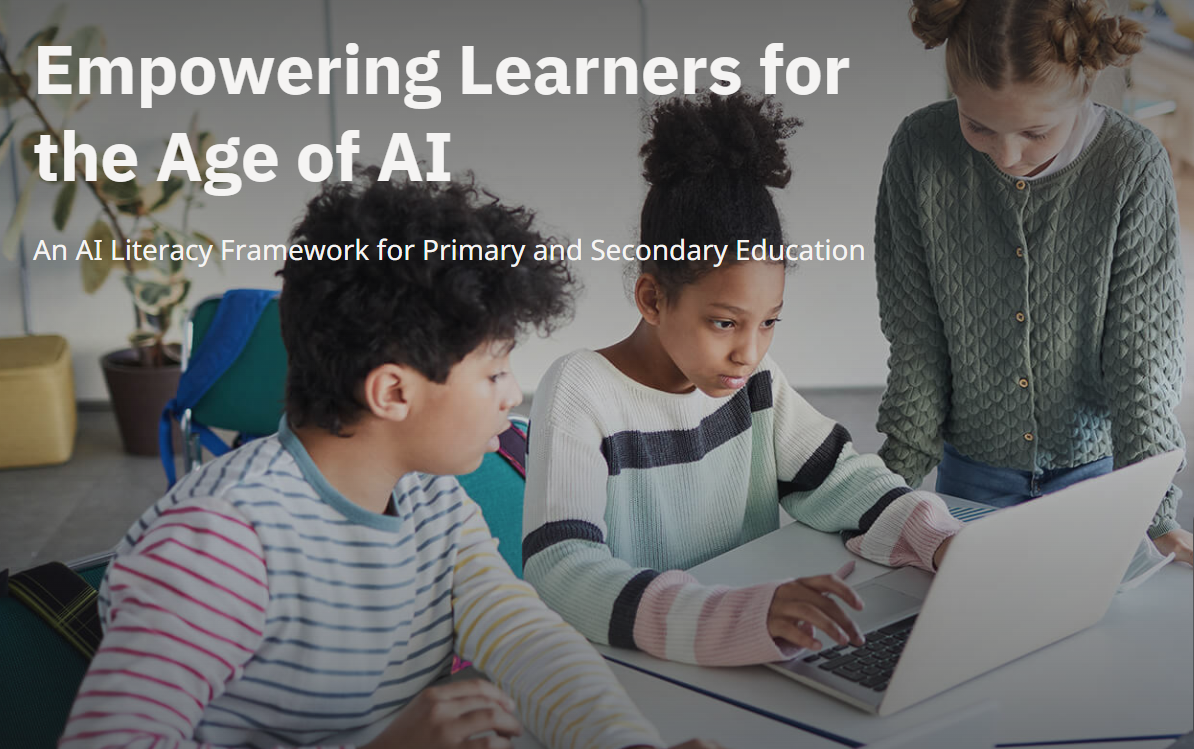
The AILit Framework is a draft AI literacy framework developed through a review of existing digital competence, media literacy, and AI literacy frameworks, alongside curriculum analysis and consultations with experts and stakeholders. It draws on established initiatives such as DigComp, UNESCO’s AI competency frameworks, Digital Promise’s AI Literacy Framework, and AI4K12. The framework is intended for primary and secondary education and seeks to provide a structured approach to understanding and engaging with artificial intelligence across different educational contexts.
The framework is organised around three broad themes: understanding how AI systems function, identifying the human skills required to interact with AI, and examining AI’s broader societal, ethical, and environmental implications. It emphasises technical concepts such as data, machine learning, bias, and the limitations of AI systems, while also highlighting skills including critical thinking, communication, creativity, collaboration, computational thinking, and problem-solving. Particular attention is given to the ways AI systems are shaped by human decisions and how their deployment can affect individuals, communities, and institutions.
The framework structures AI literacy into four domains: engaging with AI, creating with AI, managing AI, and designing AI, which together comprise 22 competences. These competences are supported by a combination of knowledge statements, skills, and attitudes, and are illustrated through learning scenarios for both primary and secondary education. Ethical considerations, including fairness, transparency, accountability, privacy, intellectual property, misinformation, and environmental sustainability, are integrated throughout the framework rather than treated as a standalone topic.
The draft recognises the role of educators in supporting AI literacy and indicates that the final version, expected in 2026 following a consultation process, will be accompanied by practical educational exemplars and contribute to the development of the OECD PISA 2029 AI literacy assessment domain.
