-
Image
-
Publish in core platform
No
-
URL
https://www.oecd.org/en/publications/oecd-digital-education-outlook-2026_062a7394-en.html
-
Link text
OECD Digital Education Outlook
-
Link Type
Skills Intelligence publication url
-
Target audience
Digital skills in education.Digital technology / specialisation
Artificial IntelligenceDigital skill level
BasicGeographic Scope - Country
European UnionIndustry - Field of Education and Training
Generic programmes and qualifications not further definedTarget language
Type of initiative
International initiative
Event setting
Publication type
General guidelines Unpacking Place Transformation September 18, 2026
 ILO: Changing landscape of skills in the age of AI September 11, 2026
Study supporting the review of the Digital Decade policy programme September 11, 2026
Lifelong learning and skills for the future August 14, 2026Skip to content
ILO: Changing landscape of skills in the age of AI September 11, 2026
Study supporting the review of the Digital Decade policy programme September 11, 2026
Lifelong learning and skills for the future August 14, 2026Skip to content

Malta Digital Skills and Jobs Platform (LISP)

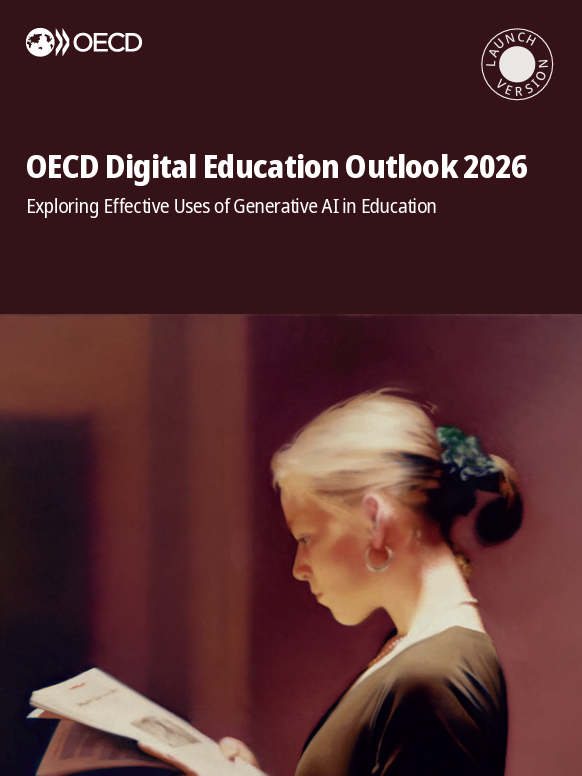
The OECD Digital Education Outlook 2026 examines how generative artificial intelligence could reshape education and the conditions under which it can improve learning outcomes and institutional efficiency. Drawing on research evidence and case studies, the report evaluates how AI tools can support students, teachers, and education systems. It emphasises that while generative AI has significant potential, its benefits depend on responsible integration into educational practices and effective policy frameworks.
For students, generative AI can enable personalised learning through tools such as intelligent tutoring systems, adaptive feedback, and collaborative learning environments. These technologies can provide tailored explanations and guidance, potentially expanding access to educational support. However, the report also warns that excessive reliance on AI to produce answers may undermine deeper learning and reduce knowledge retention when learners depend too heavily on automated assistance.
For teachers and education systems, generative AI can improve productivity and administrative efficiency by assisting with tasks such as lesson planning, resource creation, curriculum analysis, and assessment development. Evidence cited in the report suggests that these tools can save time and support instructional quality, particularly for less experienced educators. At the same time, the OECD stresses the need for governance frameworks addressing issues such as data privacy, bias, and equitable access, while maintaining strong human oversight in educational decision-making.
